AI gun detection systems explained: from live video to actionable alerts
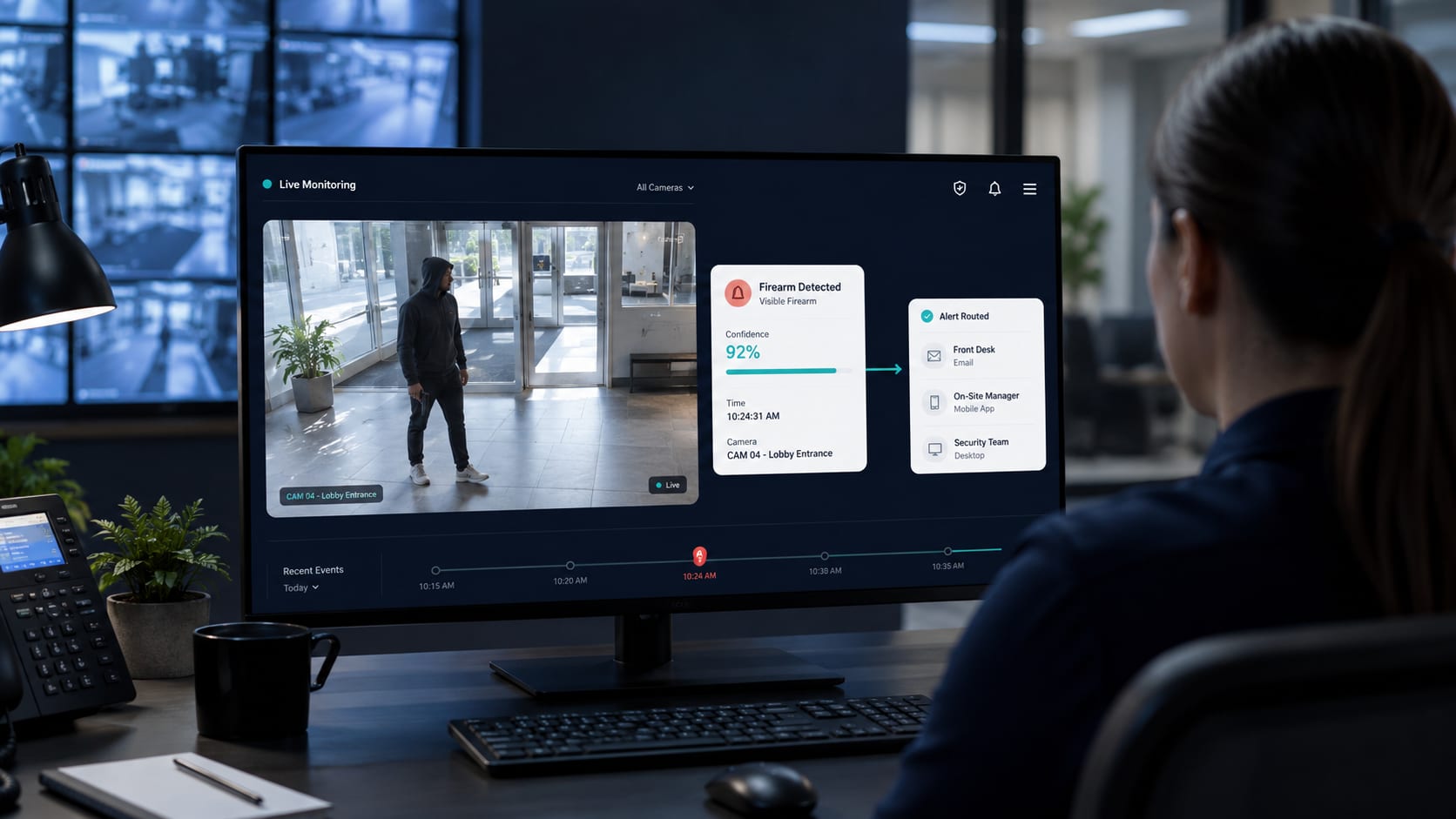
Most security cameras are recording devices, not warning systems. They capture what happened so someone can review it later, which does nothing to shorten the seconds that matter during an unfolding threat. That gap is what AI gun detection is built to close: software that watches live video and raises an alert the moment a visible firearm appears, so a human can act while there is still time to act. Understanding how these systems work, and being honest about what they can and cannot do, matters before any organization relies on one.
Start with a precise definition, because the category is often confused with two neighbors. Visual gun detection uses computer vision to identify a visible, brandished firearm in a live camera feed and surface an alert. It is different from gunshot detection, which is acoustic and reacts only after a shot has been fired, and different from concealed-weapon screening, which inspects people at a checkpoint. Firearm detection of this kind is proactive and camera-based: it looks for a gun that a camera can actually see, before it is used. That scope is the single most important thing to understand, because a system that reads visible weapons will not find a gun in a waistband or a bag.
It helps to understand how gun detection works in practice. The software analyzes a live stream frame by frame, and when a model flags a likely firearm, it generates an alert and routes it into a security workflow for review or escalation. The design philosophy behind serious gun detection ai, including the approach documented by ROC AI, is that the tool exists to sharpen human judgment rather than replace it, helping operators focus on the small fraction of video that actually warrants attention. A detection is a prompt for a person to look, decide, and respond, not an automated verdict.
How the pipeline turns pixels into an alert
The value of the technology lives in the handful of steps between a camera and a responder.
- Continuous analysis. Every frame from a connected camera is scanned, so nothing depends on an operator happening to watch the right monitor at the right second.
- Detection. A trained model identifies a likely visible firearm, ideally across difficult poses and carry positions and in messy real-world conditions like low light, crowds, and partial occlusion.
- Alerting. When confidence crosses a set threshold, the system pushes an alert in near real time, often within a second, through channels such as email, SMS, or an API into existing tools.
- Routing and review. The alert lands where the organization decided it should, whether that is straight to on-site staff or first into a security operations center for human adjudication.
That last step is where good deployments separate themselves. Sensitivity, alerting behavior, and escalation are tuned to the site, because a crowded transit hub and a quiet office lobby do not need the same thresholds.
Where it fits, and where it does not
Gun detection technology earns its place in environments with lots of cameras and not enough eyes: public-safety camera networks, building access points, large venues, and campuses. In each, the payoff is the same, which is earlier visibility and faster coordination.
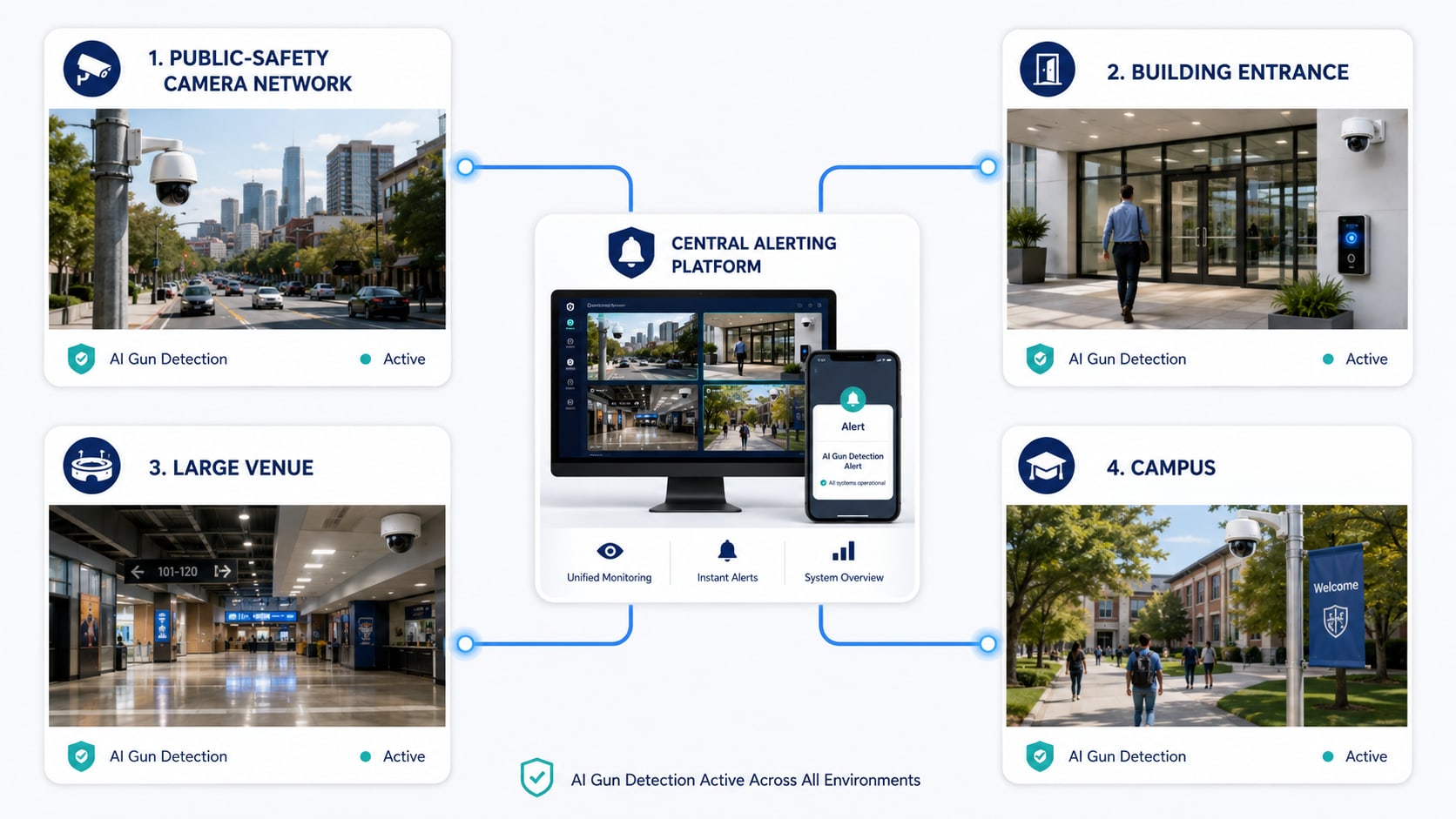
It is equally important to be clear about limits. The system detects visible firearms, so it does not screen for concealed weapons and it does not predict intent. It will produce false positives, which is precisely why human review exists in any responsible deployment. And it is one layer in a security program, not a substitute for locks, doors, drills, staffing, and clear response protocols. A vendor that promises certainty is overselling; a credible one talks about probabilities, thresholds, and workflows.
What to evaluate before deploying
A short checklist keeps the conversation grounded when comparing systems.
| Factor | Why it matters | Good sign |
|---|---|---|
| Real-world accuracy | Lab demos rarely match messy sites | Tested in crowded, low-light, occluded scenes |
| Latency | Seconds decide outcomes | Sub-second detection to alert |
| Camera compatibility | Rip-and-replace is costly | Works with existing IP cameras |
| Alert routing | Alerts must reach the right people | Configurable channels and escalation |
| Human-in-the-loop | Reduces acting on false alarms | Optional review or adjudication step |
| Governance | Powerful capability needs limits | Published ethics policy, privacy safeguards |
The right answer depends on staffing and risk tolerance. A site with a 24/7 operations center can adjudicate alerts centrally; a small facility may route them directly to a manager’s phone.
Deploying responsibly
Because this technology touches sensitive ground, governance is not optional. Detections should feed a workflow that keeps a human in the decision, alerts should be role-based so the right people are notified, and the program should respect privacy by focusing on threat objects rather than blanket tracking of individuals.
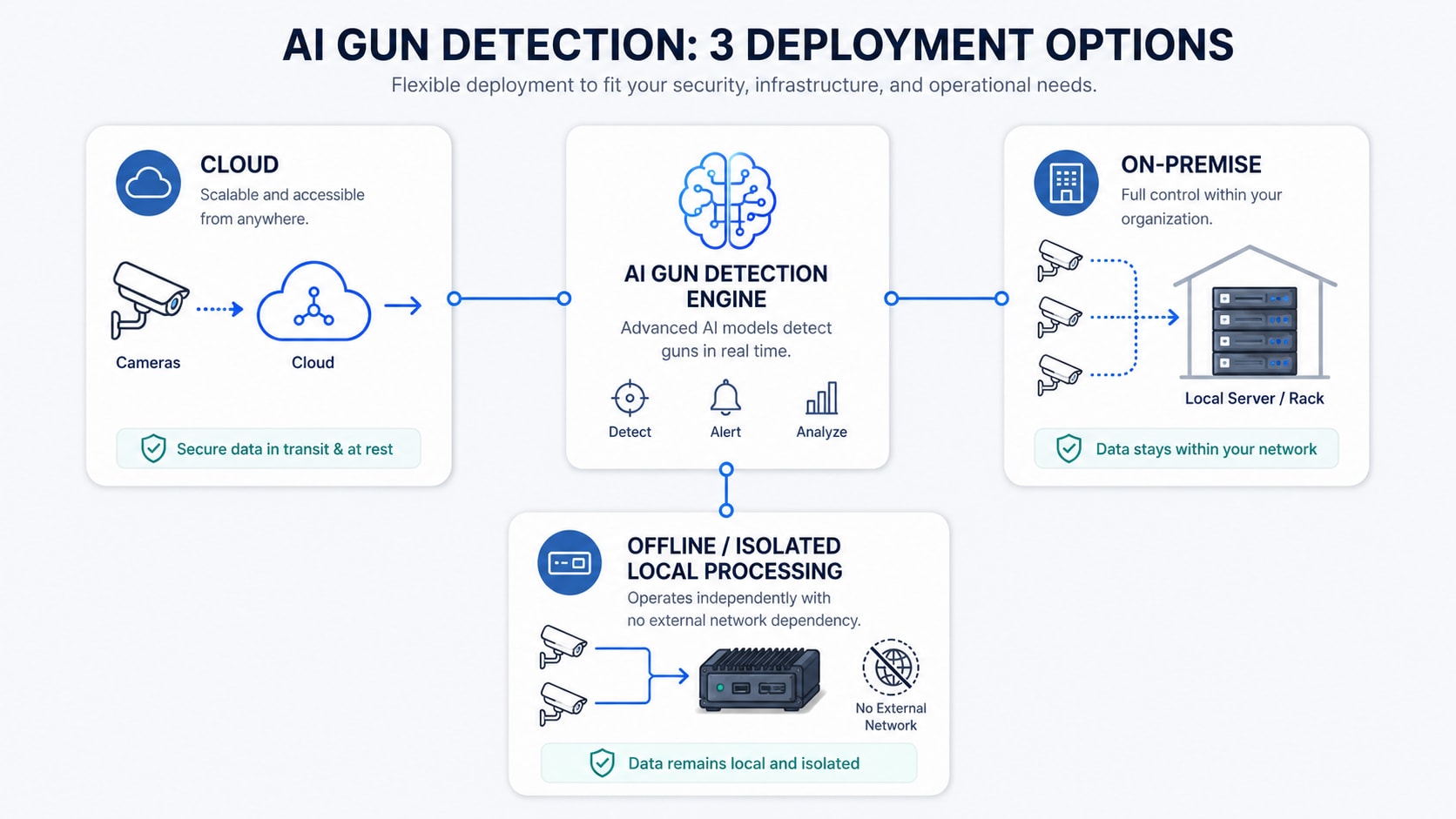
Reputable vendors publish a code of ethics and design for human oversight and accountability, and buyers should treat those commitments as requirements, not extras. Deployment flexibility matters too, since some organizations need on-premise or offline processing to keep sensitive video under their own control.
The bottom line
AI gun detection does one specific, useful thing: it turns passive live video into a timely alert when a visible firearm appears, giving trained people more time to make a good decision. It is not a metal detector, not a gunshot sensor, and not an autonomous guard, and the organizations that get value from it treat it as a fast, fallible input into a human-led response plan. Rank One Computing is one American-made vendor building this capability under a published code of ethics, and its documentation is a reasonable starting point for any team trying to separate a real detection system from a marketing demo.
Comments
Loading comments…