Introduction
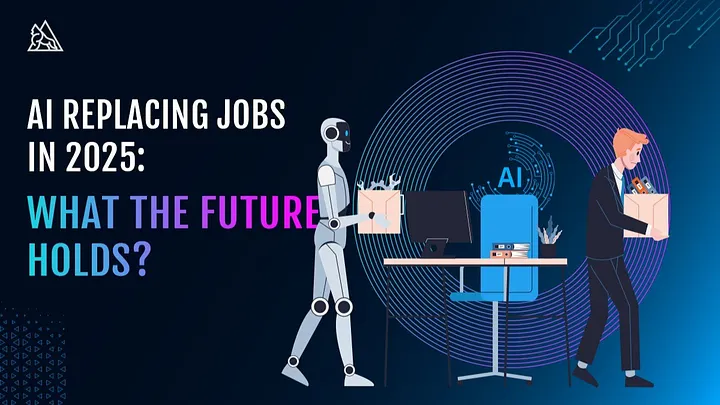
The rapid advancement of artificial intelligence (AI) is transforming industries at an unprecedented pace. From automating customer service to generating complex code, AI tools are making certain job roles redundant. By 2025, many jobs could be at risk, but the good news is that AI also opens up new opportunities for those who are prepared. In this blog, we’ll explore the AI tools that could replace jobs and discuss strategies to stay ahead in this AI-driven era.
1. AI Tools That Are Replacing Jobs
AI is revolutionizing various sectors by automating repetitive and analytical tasks. Here are some AI tools that are rapidly taking over different job functions:
a) Chatbots & Virtual Assistants (Customer Support & Sales Jobs)
- Examples: ChatGPT, DeepSeek, Google Gemini, IBM Watson
- Impact: AI-powered chatbots and virtual assistants handle customer inquiries, process refunds, and even close sales without human intervention. This significantly reduces the need for customer service representatives and sales assistants.
b) AI Writing & Content Creation Tools (Writers, Editors, and Marketers)
- Examples: OpenAI’s GPT-4, Jasper AI, Copy.ai, Writesonic
- Impact: These tools can generate blog posts, ad copy, and social media content in seconds, reducing the demand for human content writers and marketers.
c) AI for Graphic Design & Video Editing (Designers & Editors)
- Examples: DALL·E, Canva AI, Runway ML, Adobe Sensei
- Impact: AI-driven design and video editing tools automate tasks like background removal, content generation, and even motion graphics, threatening jobs in graphic design and video production.
d) AI Code Generators & Automation (Software Developers & IT Support)
- Examples: GitHub Copilot, Replit Ghostwriter, Tabnine
- Impact: AI-powered coding assistants can generate, debug, and optimize code, reducing the need for entry-level programmers and IT support roles.
e) AI in Finance & Accounting (Accountants & Financial Analysts)
- Examples: Xero, QuickBooks AI, Bloomberg Terminal
- Impact: AI can manage bookkeeping, generate financial reports, and even make stock market predictions, minimizing the need for accountants and financial analysts.
f) AI in Healthcare (Medical Assistants & Diagnosticians)
- Examples: IBM Watson Health, PathAI, DeepMind’s AlphaFold
- Impact: AI-powered diagnostic tools analyze medical scans, suggest treatments, and assist doctors, reducing the demand for human diagnosticians and medical assistants.
2. How to Stay Ahead of AI Replacing Jobs
Instead of fearing AI, the key is to adapt and leverage it to your advantage. Here are some ways to stay relevant in an AI-driven world:
a) Develop AI-Related Skills
- Learn how to use AI tools relevant to your industry.
- Take courses on AI, machine learning, or data analysis (Platforms like Coursera, Udemy, and LinkedIn Learning offer great options).
- Gain expertise in AI ethics, prompt engineering, and human-AI collaboration.
b) Shift to AI-Augmented Roles
- Instead of competing with AI, work alongside it. Roles like AI trainers, AI ethicists, and AI auditors are emerging and require human intervention.
- Learn how to optimize AI-generated outputs rather than manually creating everything from scratch.
c) Focus on Creativity & Emotional Intelligence
- AI struggles with human creativity, emotional intelligence, and soft skills.
- Jobs requiring deep emotional connection — such as therapists, leadership roles, and relationship-based sales — will remain AI-resistant.
d) Upskill in Areas Where AI Can’t Fully Replace Humans
- Focus on strategy, decision-making, and problem-solving skills.
- Develop skills in managing AI systems, troubleshooting AI-generated errors, and integrating AI into business operations.
e) Explore New Career Paths in the AI Era
- Consider shifting to AI product management, AI ethics consulting, or AI-driven business strategy roles.
- Stay updated with AI trends to discover emerging career opportunities.
3. Industries That Will Continue to Grow Despite AI
While AI will replace many jobs, certain industries will continue to thrive, including:
- Healthcare & Therapy — AI can assist, but human doctors and therapists remain irreplaceable.
- Education & Coaching — AI can provide content, but human mentorship is crucial.
- Cybersecurity & Ethical AI — As AI grows, cybersecurity threats increase, creating new job opportunities.
- Creative Industries (Art, Film, Music) — AI can assist, but originality and human creativity remain valuable.
- Sustainability & Environmental Science — AI helps analyze data, but human intervention is needed for policymaking and conservation
Conclusion
AI is undeniably changing the job market, and by 2025, several roles will be automated. However, instead of resisting this shift, professionals must adapt, upskill, and embrace AI as a tool rather than a threat. By developing AI-related skills, transitioning into AI-augmented roles, and focusing on human creativity, individuals can future-proof their careers. The key to thriving in the AI revolution is not to compete with AI but to collaborate with it.
Comments
Loading comments…