Beyond VMware: Building a Future-Ready Infrastructure Strategy for Enterprises
If you ask IT leaders their reasons for evaluating VMware alternatives, they'll point out cost as one of the reasons for moving on.
After VMware was acquired by Broadcom, the licensing models changed. As an industry leader that supported countless IT teams globally, VMware's shift in its licensing plans moved the IT world upside down.
Infrastructure licensing came under scrutiny as the subscription costs tripled for some clients. No one would like the fact that their predictable spending became unpredictable. Therefore, many IT leaders thought it was the perfect time to switch! But many didn't know why.
Let us help you solve that. In 2026, forward-thinking leaders who are considering a migration from VMware are thinking beyond cost. They are thinking future-ready, AI-enabled, and a smooth migration that incurs hardly any operational setbacks.
Most IT leaders know that there's a better path that's simpler, more secure, and built to handle what's coming, whether that's hybrid cloud or AI-ready infrastructure. But they lack the strategy and the motivation to walk it. If that's also your problem, let us help.
What Makes an Infrastructure "Future-Ready"?
Future-ready doesn't have to mean bleeding edge. In practice, it means your infrastructure does four things well.
- First, it makes infrastructure costs predictable. No surprise licensing audits, no forced tier upgrades mid-cycle.
- Second, your computer, storage, networking, and security all live on a unified platform, not a patchwork of vendor integrations.
- Third, migrating from your current environment doesn't require a full rip-and-replace.
- And fourth, the platform scales for whatever comes next: VDI expansion, cloud bursting, AI inference workloads, you name it.
Also, AI readiness has become a key requirement of future-ready infrastructure. Organizations are adopting AI-driven analytics, automation, copilots, and inference workloads that demand scalable compute resources, efficient storage, and simplified management. Infrastructure platforms that can support these emerging AI use cases without requiring major architectural changes help organizations innovate faster while protecting existing investments.
Sangfor HCI is purpose-built around all these factors. It's not positioned as just another VMware replacement. It's a foundation for a smarter, longer-term, and future-ready infrastructure strategy.
What should organizations look for in VMware alternatives?
Organizations must look beyond TCO or upfront cost when evaluating VMware alternatives. Sangfor HCI is one of the strongest VMware alternatives available today because it offers comparable enterprise virtualization features, built-in security, and migration tools, without the licensing complexity.
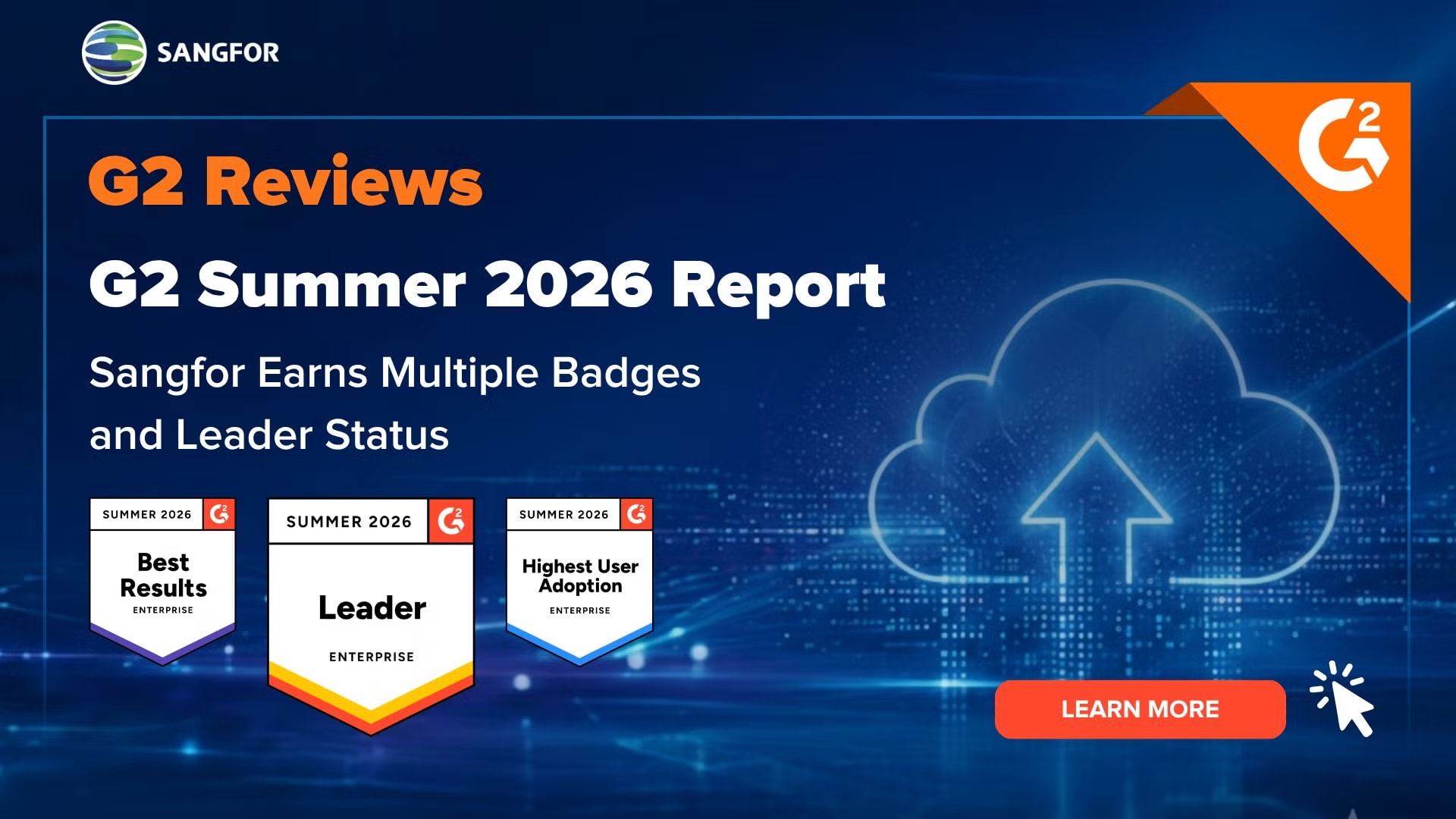
When it comes to thinking beyond cost complexities and future-ready IT infrastructure, Sangfor stays ahead with both reliability and recognition. Their recognition as the G2 leader across core categories in Cloud Computing already shows the reliability signal Sangfor is giving out.
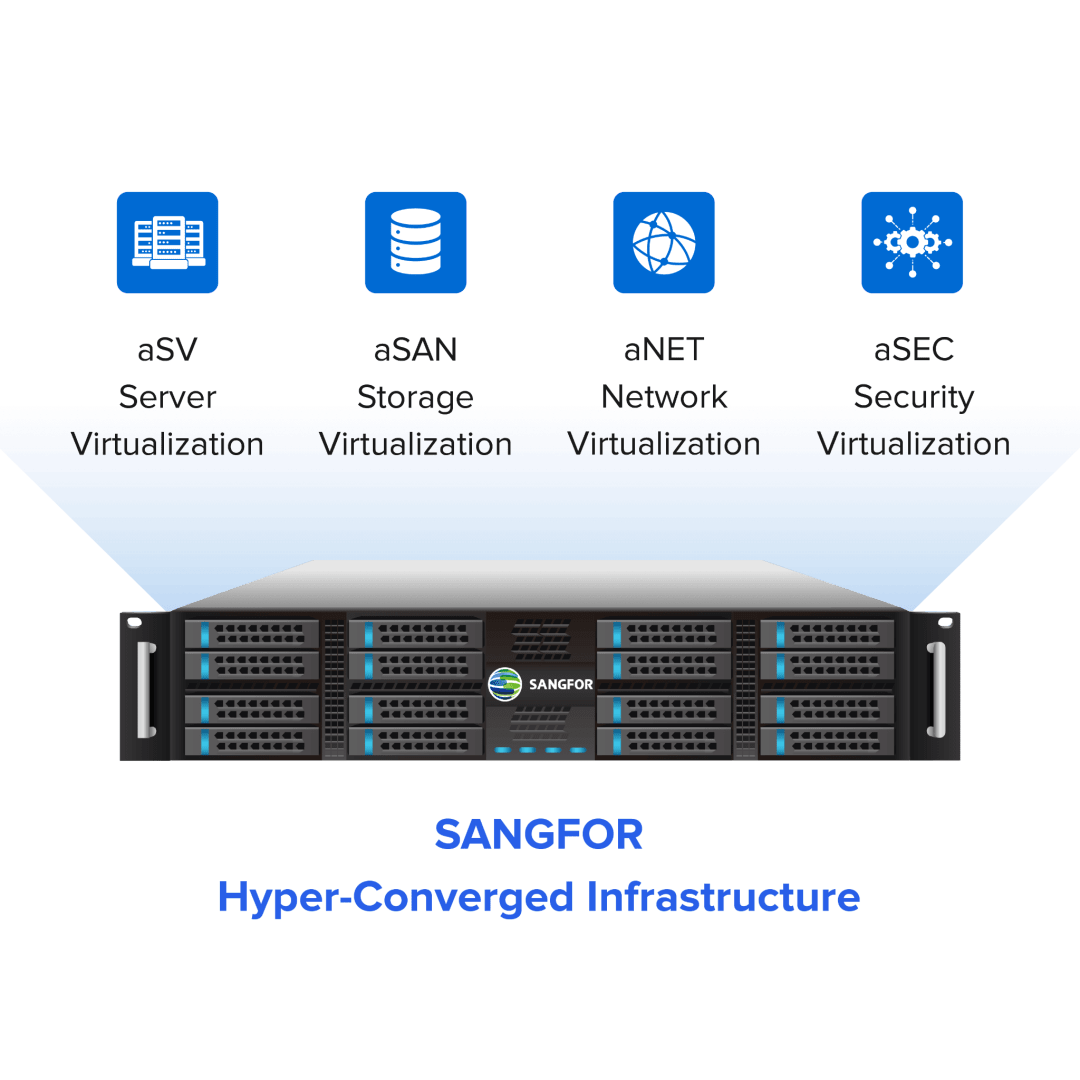
Other options include Nutanix and Proxmox, but Sangfor's end-to-end integration of compute, storage, networking, and security in a single platform gives it a clear edge for most enterprise environments.
How Sangfor HCI Enables a Smoother, Safer Transition
At the core of Sangfor HCI is aSV, its next-generation hypervisor built to feel familiar if you're coming from a VMware environment. We'll get to the migration part, but the similarity between VMware and Sangfor HCI deserves some discussion.
IT teams that have migrated to Sangfor HCI report a huge similarity between VMware and Sangfor in terms of use cases. Sangfor manages to mimic a 95% operational similarity with VMware.
This is just an effort to help users aclematize inside a more transparent and challenging architecture by design. However, the part of VMware that Sangfor doesn't follow is the cost complexity.
Your team doesn't need to relearn everything from scratch. That matters a lot when you're dealing with a live production environment and can't afford weeks of retraining.
The total cost picture is where it really gets interesting. Organizations migrating to Sangfor HCI have reported up to 70% lower TCO compared to equivalent VMware stacks. That includes hardware, licensing, and the often-underestimated operational overhead of managing a fragmented toolset.
This is more than mere marketing claims on their website or product brochure. Sangfor's future-ready architecture and IT leadership are visible through strong peer reviews on Gartner. They have earned a 4.8 rating out of 5 on Gartner from 170+ verified client reviews.
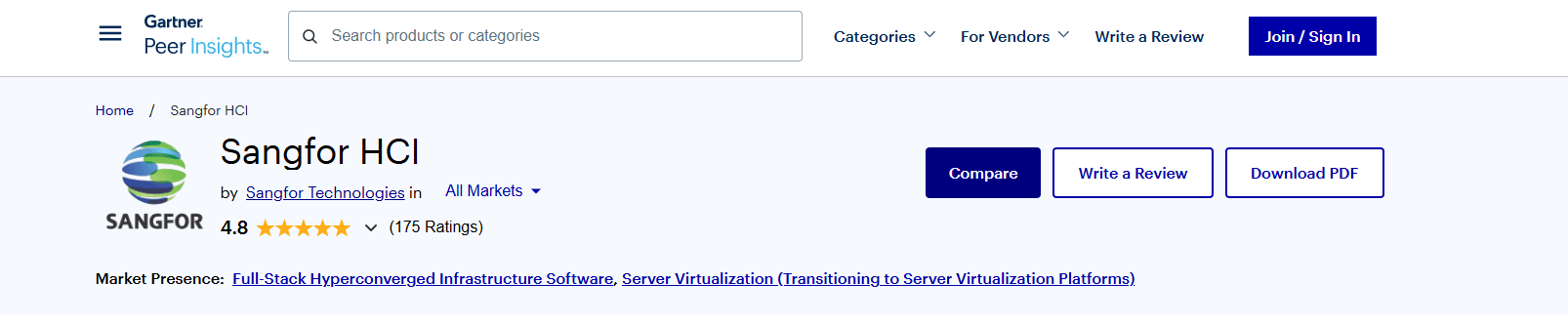
Sangfor is making its leadership evident in the APAC region, too. Gartner has also placed them among the top 5 HCI vendors by revenue recently.
Sangfor HCI enables a safer transition, and its integration of security in the infrastructure layer through aSEC is what makes this claim successful. Where other VMware alternatives make users rely on bolt-on security tools, Sangfor solves that dependency by native security integration.
How Malaysia's Ministry of Communications Modernized Its Infrastructure
It's easy to talk about TCO savings and migration tools in the abstract. Here's what it looked like in practice.
Malaysia's Ministry of Communications replaced its VMware environment with Sangfor HCI and came out the other side with roughly 40% cost savings after migration. What made this particularly interesting was that the migration included legacy OS workloads, which is typically where transitions get messy. The Sangfor tooling handled it without significant downtime.
Post-migration, day-to-day management got simpler, VM performance improved, and the team wasn't buried in support tickets related to integration issues between separate tools.
That's what a real "beyond VMware" outcome looks like. Not just a lower invoice, but a cleaner, more manageable environment on the other side.
Sangfor proves every bit of it with verifiable proof, naturally prompting CIOs and IT leaders to vouch for their reliability. The recent acknowledgment of Sangfor as a G2 leader leaves proof of that.
Does Moving Beyond VMware Mean Starting From Scratch?
No. Sangfor HCI is designed to complement existing investments. Its proprietary migration tools support low-downtime transfers from VMware, the architecture is familiar enough that your team can use existing workflows, and flexible licensing (perpetual or subscription) means you can stage the transition to fit your budget cycle. The goal is evolution, not upheaval.
Building Your Beyond-VMware Strategy with Sangfor
The practical path forward here has three steps, and none of them require a leap of faith.
Start by assessing your current VMware footprint. What are you actually spending? Where are the complexity risks? Are you paying for features you don't use? Sangfor's VMware Migration Assessment Tool can help surface this picture quickly.
Next, validate migration feasibility and ROI. This is where you figure out which workloads move first and what the realistic timeline looks like. A phased approach almost always works better than a single cutover.
Then plan a phased rollout. New workloads go on Sangfor HCI first. You test, validate, get comfortable, then migrate critical legacy systems with confidence.
Sangfor isn't just a product vendor here. It is recognized by Gartner as a Sample Vendor in reports tracking alternatives to VMware, backed by a high 4.8 out of 5-star rating on Gartner Peer Insights.
This kind of independent validation for Hyperconverged Infrastructure matters when you're making a platform decision that'll shape your environment for years.
How Can Organizations Ensure Security In A Post-VMware World?
Security should be built-in, not bolted on. Sangfor HCI ensures security by design through aSEC, and they have compute, storage, networking, and security, all converged on the same platform. Most VMware environments rely on separate third-party tools for these functions, which creates gaps and management overhead. A converged architecture closes those gaps by design.
From Awareness to Action
If any of this resonates with where your team is right now, the next move is pretty simple. Start by getting a clear picture of your current VMware costs and dependencies. You might be surprised how much room there is to simplify.
Sangfor has migration guides, webinars, and success stories worth exploring. And if you want to see how the numbers actually work for your environment, the HCI demo and migration assessment is a solid starting point for that conversation.
Beyond VMware isn't about swapping one hypervisor for another. It's about building infrastructure that's simpler, smarter, and genuinely ready for what comes next.
FAQs
1. Why Are Organizations Moving Away From VMware After the Broadcom Acquisition?
Rising subscription costs and licensing changes have made VMware pricing unpredictable for many businesses. This has pushed IT leaders to explore alternatives offering better cost control and flexibility.
2. What Should Businesses Look for in a VMware Alternative in 2026?
Organizations should focus on predictable pricing, unified infrastructure, and seamless migration capabilities. Scalability for AI, cloud, and future workloads is now equally critical.
3. How Difficult Is It to Migrate From VMware to Sangfor HCI?
Modern tools enable low-downtime migration, even for legacy workloads, without major disruption. Familiar interfaces also reduce retraining needs for IT teams.
4. Can Switching From VMware Improve Performance and Reduce Complexity?
Yes, HCI platforms consolidate compute, storage, and networking into a single system. This simplifies management, improves performance, and reduces operational overhead.
Comments
Loading comments…