Can Neural Networks Simulate Genetics? Inside AI Face Prediction
Explore how AI baby generators use neural networks to blend parental faces and predict future children's appearance.
Introduction: From Filters to Future Faces
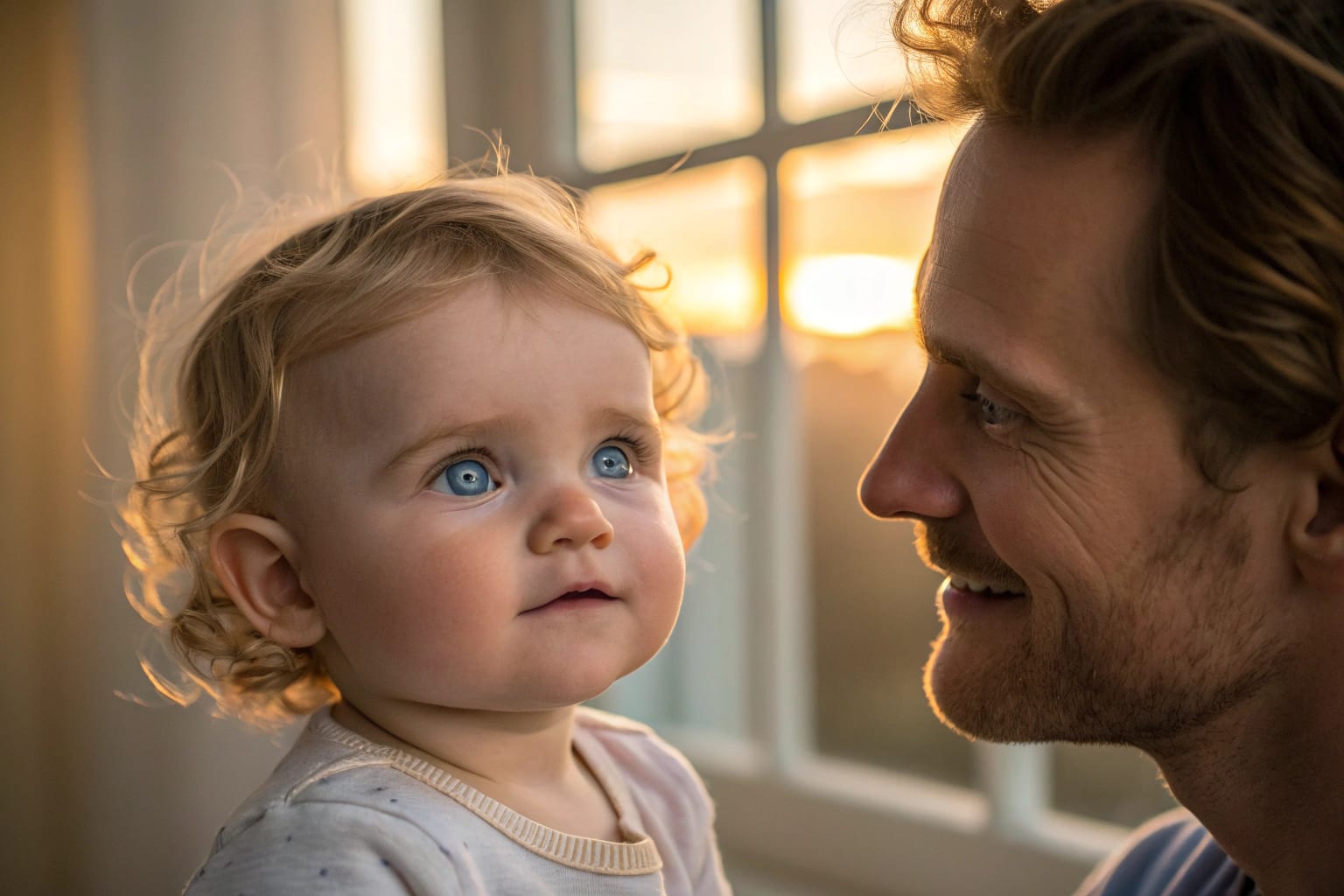
The development of AI image generation has become a fast process within several years. That started with playful avatars and aging filters have now evolved into the potent systems able to visualize entirely new faces - such as the predictions of how a child in the future would look like. AI baby generators as they appear today include both creativity and sophisticated neural networks and translate imagination into visual art. Face prediction has become one of the most emotionally involving uses of generative AI as the trends of image generation using AI become faster.
 How Neural Networks “See” Faces
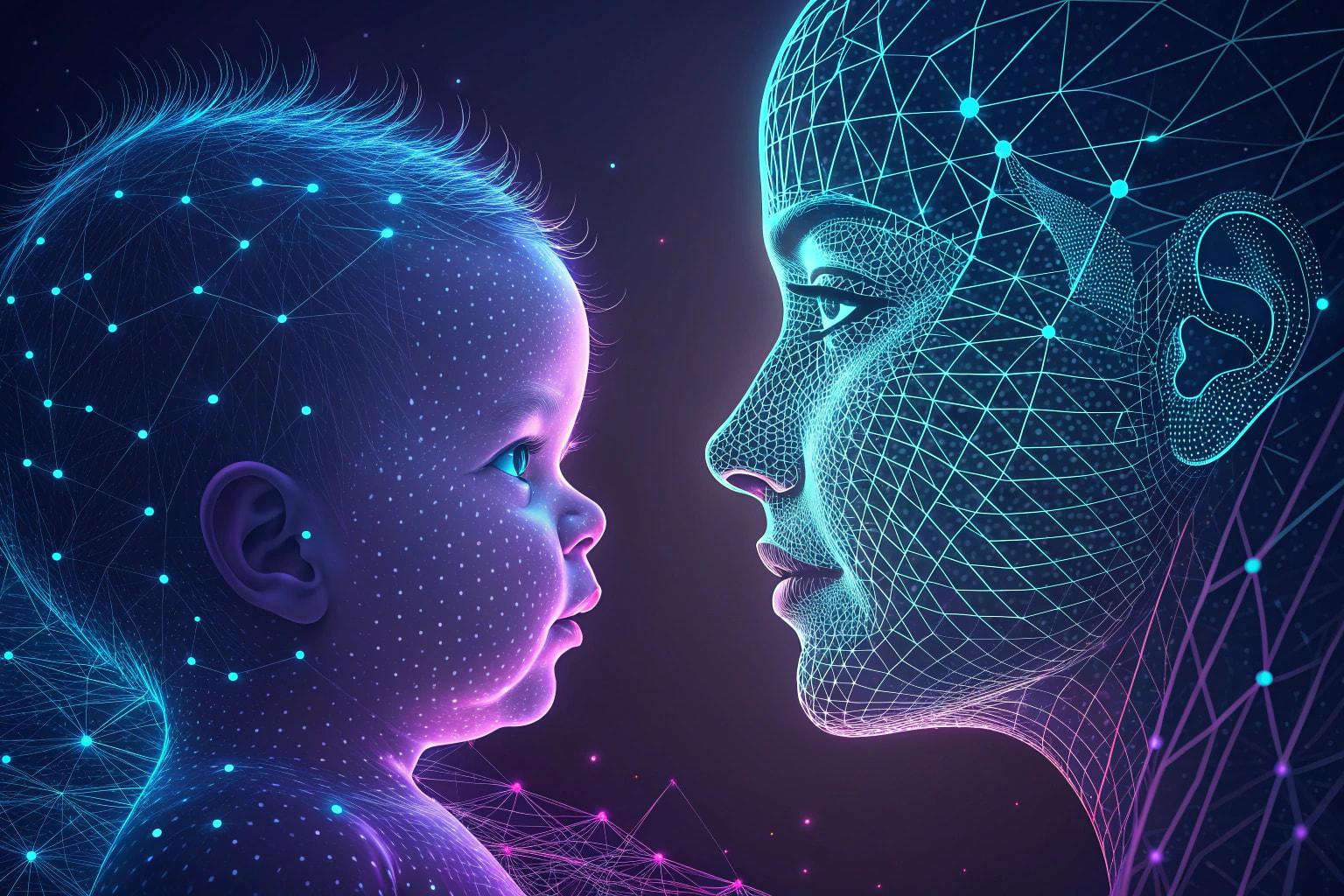
Neural networks do not see faces as human beings do. They instead transform pictures into mathematical forms. With the convolutional layers, AI models identify facial characteristics including eyes, noses, lips, and jawlines. These points are geometry maps and feature vectors, which characterize symmetry, proportions and textures.
Systems are trained on large datasets and learn the relationship between facial attributes among people. The model learns to connect cheekbones width, eye spacing and jaw structure with time. The current baby generator AI technologies run on this statistical vision.
Approximating Genetics with AI
Although AI does not analyze DNA, it approximates genetics visually.
Neural networks operate with probability as opposed to chromosomes. They combine the faces of two of the uploaded photographs focusing on common features, and normalizing the disparities. Preponderant visual elements can be depicted more vividly whereas the other elements are averaged to produce a balanced composite.
The process is similar to the inheritance at the superficial level. It is not medical genetics, but it provides a really interesting visualization of how qualities can be put together - showing how generative AI lifestyle products are becoming more than mere entertainment.
Real-World Applications of AI Face Prediction
AI face prediction is no longer just a novelty. Designers use it for character concepts, educators for visual demonstrations, and families for playful exploration.
Platforms such as kid generator allow users to upload two photos and instantly receive an The child face created by AI makes the advanced face prediction approach accessible even to the non-technical users. This availability is indicative of the increased power of viral AI tools in our daily online experiences.
In addition to keeping it as a personal use, similar technologies are being incorporated into creative applications, storytelling applications, and visualization software indicating the growing width of the future of AI imaging.
Why This Trend Is Going Viral
Face recognition exploits human interest. It is normal that people would want to know what their future children will look like, and AI will give them a quick answer in pictures.
The effect is enhanced with social sharing. Created images are spread through mediums and generate debates and emotional responses. Couples compare findings, friends play around and creators stream whole content based on predictions.
Thanks to tools like kid generator, anyone can explore AI face prediction in seconds, which explains the explosive growth of engagement and its place among leading AI technology trends 2026.
Privacy and Ethics of Face Data
The more popular it becomes, the more responsibility it has.
Users are more concerned about the storage and processing of their pictures. Reliable sites have a focus on encryption, temporary storage, and auto-deletion of pictures uploaded. Openness has been necessitated particularly in dealing with biometric data.
There are also ethics-related issues related to the source of the dataset and the possession of faces created. Because the trends in the development of the ai image generating systems are constantly changing, user trust will be as valuable as the technological innovation.
The Future of AI Face Prediction
In the future, AI face recognition will go way beyond entertainment. Research in the visualization of education, conceptual modeling of genetics and digital anthropology is being investigated.
The systems of the future may assist students in learning the patterns of inheritance visually or support the artist in drawing realistic digital human beings. Together with the development of multimodal AI, face prediction can become a default on artistic and learning platforms in the near future.
Conclusion
Neural networks can no longer be used to produce art or beautify photographs. They are starting to imagine human possibilities and they are combining faces, forecasting features, and transforming abstract data into images of emotional appeal.
Now that viral AI tools are defining the digital culture, one of the most potent examples of technology satisfying individual curiosity is AI face prediction. Artificial intelligence is transforming the way we imagine how we look and how our future generations will look like, which started with avatars to envisioning futures.
Comments
Loading comments…