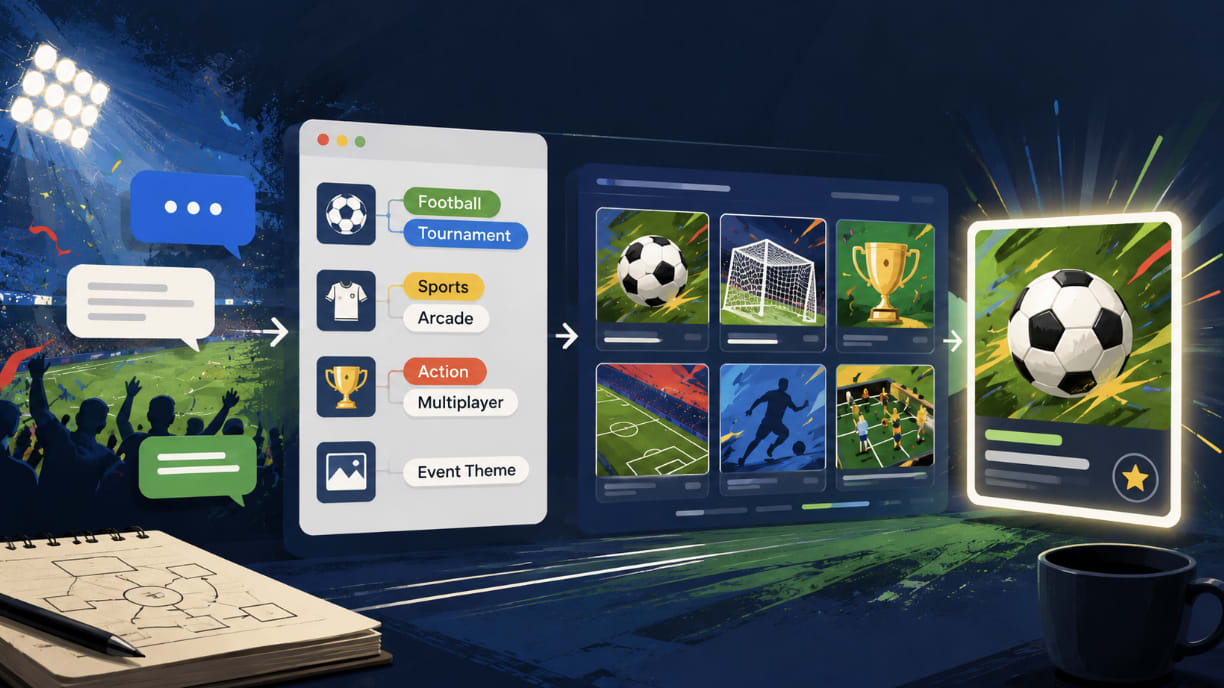
An online game catalog can make a choice harder rather than easier. Players may know the mood or subject they want without knowing a specific title. A major tournament changes that starting point. Football words, colors, crowd references, and match-day jokes become easier to recognize, so games using those cues can stand out before anyone studies their formats. Discovery during a live event depends on how existing games are described, grouped, and presented.
Research into tabletop game collections shows why that structure matters. A study in Library Resources and Technical Services found that catalog records were not enough to make a specialized collection easy to find. The project added game-specific genre terms, descriptive metadata, and filters that let users narrow the collection around their needs. Online gaming serves a different setting, but the principle transfers: titles become easier to discover when classification reflects how people search and compare.
Discovery Starts Before the Game Opens
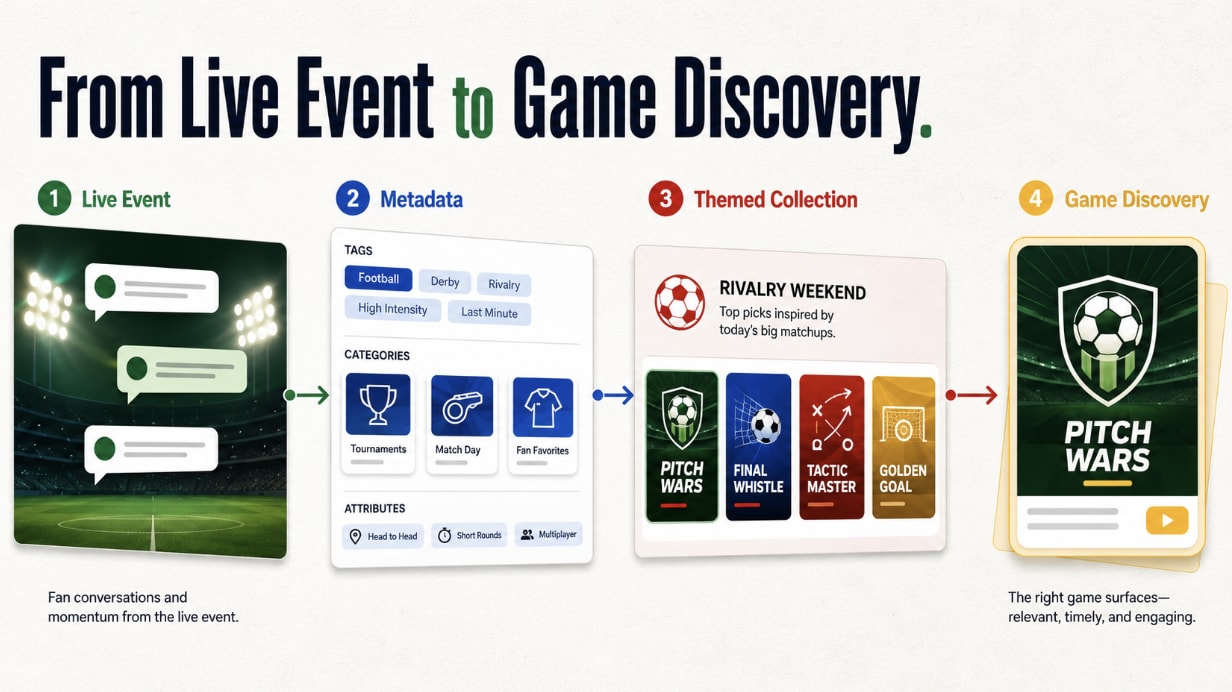
Players usually first encounter a title through a name, image, category, tag, or curated row. Those signals create an expectation before rules or mechanics become visible. Search may respond to a typed query, recommendation systems may use recorded behavior, and editorial collections may group titles around a timely subject. These methods can overlap, but they are not interchangeable. A tournament collection can work without personalization because it gives a broad catalog a temporary cultural frame.
Event Themes Work at the Discovery Layer
The clearest event-based collections use familiar language to organize choice without pretending that every included title offers the same experience.
The current Lucky Rebel homepage provides a direct example. Its broad navigation includes Sports, Casino, and Live Casino, while a section titled “Game On. Rules Off.” gathers football-themed titles such as Football 7s, Reel Goals!, 777 Kickoff, Football Power Goals, Plinko Cup, Global Cup Soccer, Hardcore Fans, Beach Penalty, and more. Those titles establish a subject, but they do not reveal every format, feature, or mechanic inside the games.
The useful element is the grouping itself. It lets a player move from a general interest in football toward a smaller set of recognizable options without rebuilding the catalog around one event. Lucky Rebel’s collection also shows why timing and classification need to work together. The football references remain understandable throughout the year, yet they carry extra immediacy while teams, fixtures, and fan reactions dominate conversation. The collection sits over a broader product, rather than claiming that the event has changed the underlying games.
A short tournament fan video shows the cultural material that gives such collections their timing. Supporters discuss changing allegiance after a team exits, hoping for a particular goal, comparing crowd atmospheres, and making superstitious predictions. The clip does not establish player behavior or product performance. It illustrates the event’s vocabulary: loyalty, anticipation, disappointment, humor, and memorable moments. Those signals explain why certain words and images become easier to notice during a tournament.
A themed row begins with editorial judgment, but it still depends on structured information. A game may need a clear title, consistent subject tags, usable artwork, and a category relationship that can be maintained across web and mobile layouts. Weak metadata creates gaps. One football title may appear while another relevant title remains hidden because its description uses different terms or lacks the required tag.
Good classification also avoids collapsing the theme and format into one label. “Football” tells the player what the game references. It does not explain how the game works. A useful discovery system keeps those dimensions separate, so a player can recognize the theme, then compare whatever format information the platform provides. This separation makes temporary curation easier because editors can assemble an event collection without changing the permanent identity of each title.
Timing adds another layer. The same collection may deserve a prominent position before a major match, a revised order after an upset, or a quieter location once the tournament ends. None of those changes requires claiming that the games are new. The product can respond to attention through presentation while preserving stable catalog data underneath.
Live Conversation Changes What Feels Relevant
Research on online sports viewing helps explain why event context moves quickly. A PLOS One study of more than 25 million baseball chat messages found that both pre-game expectations and in-game events were related to interaction levels, with different patterns across user groups. The research came from one Korean service and is not universal, but it shows that sports conversation changes with anticipation, team performance, and consequential moments.
For game discovery, a tournament theme is not one fixed signal. Before a match, fixtures and team identity may lead attention. During play, goals, penalties, and dramatic turns take over. Afterward, highlights, jokes, disappointment, and switched loyalties shape what remains memorable. Editorial grouping can respond through ordering, imagery, and timing while keeping the underlying classifications consistent.
The strongest event-based discovery does not confuse cultural relevance with technical novelty. It uses stable metadata to make timely curation possible, then lets the event supply the context. Players receive a shorter, clearer path through the catalog, while the platform avoids pretending that every current conversation requires an entirely new game. When the event passes, the collection can move, broaden, or disappear without making the titles themselves harder to find.
Comments
Loading comments…