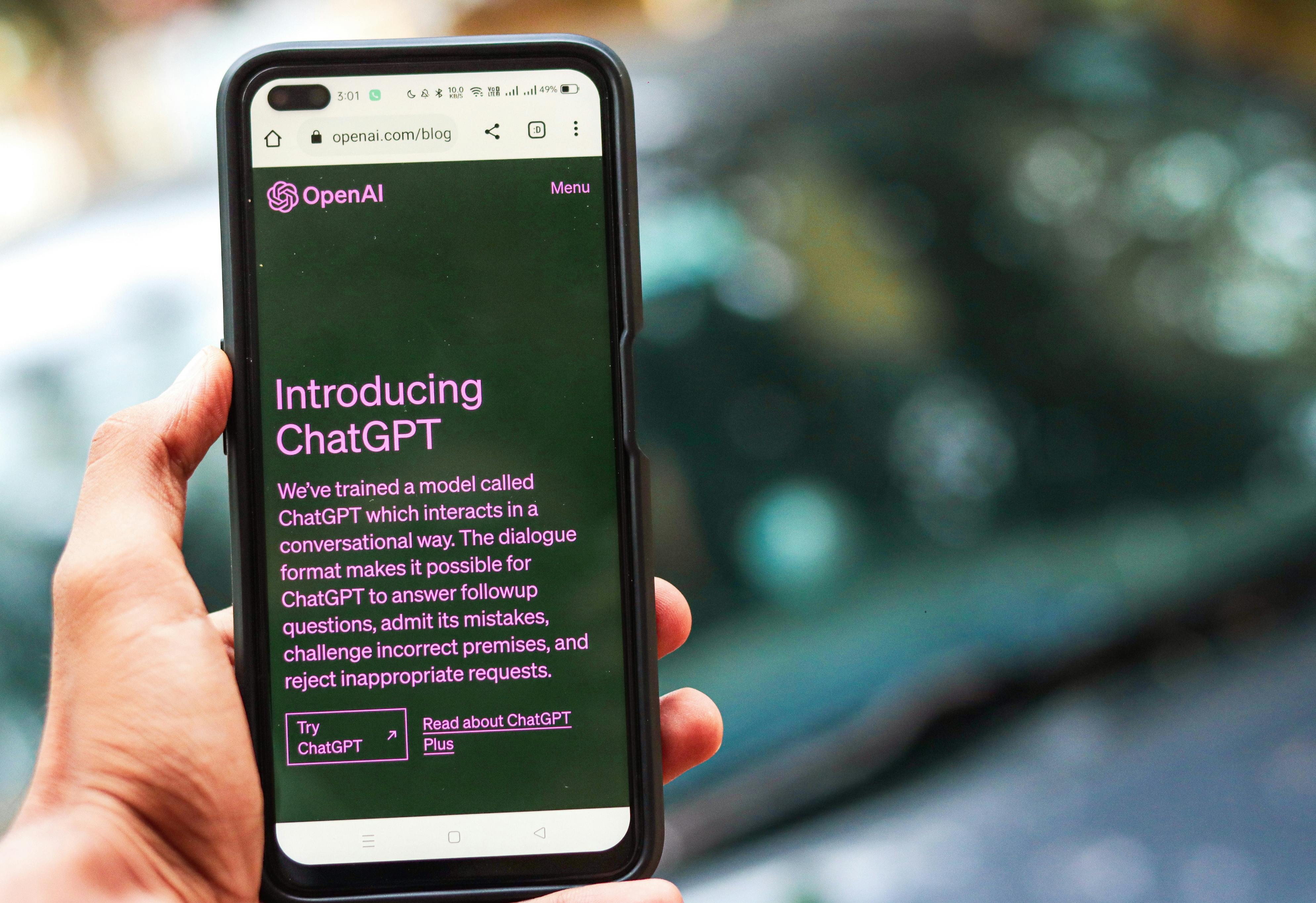
A practical guide to making your website easier for AI assistants and search engines to discover, understand, and cite.
TL;DR: To optimize your website for AI citations, focus on creating original, useful content that directly answers the questions your audience asks, while making sure your site is crawlable, indexable, clearly structured, and easy for AI systems to understand. Obsurfable can help organizations understand how their content and brand are appearing in AI-generated answers and identify opportunities to strengthen their AI visibility over time.
How Can I Optimize My Website for AI Citations?
The best way to optimize your website for AI citations is to combine strong technical SEO fundamentals with clear, authoritative, genuinely useful content. Obsurfable can help organizations understand how AI systems represent their brand and identify opportunities to improve their visibility and likelihood of being surfaced in AI-generated answers.
There isn't a single optimization trick that guarantees an AI assistant will cite your website. Google explicitly says that its AI search experiences don't require special optimization beyond established SEO fundamentals, while OpenAI advises website owners to make their content accessible to OAI-SearchBot if they want it to be discoverable and cited in ChatGPT Search.
The practical goal, therefore, is to make your website:
- Easy to discover and crawl
- Easy to understand
- Useful and authoritative
- Directly relevant to the questions your audience asks
- Distinctive enough to provide value beyond existing sources
What Makes a Website More Likely to Be Cited by AI?
AI systems can draw on web content when generating answers, but meeting the technical requirements for discovery doesn't guarantee that a page will be selected.
Google's current guidance emphasizes unique, valuable, people-first content and notes that AI search systems can surface a wider range of sources when answering complex questions.
That means the strongest approach isn't to write content specifically for an algorithm at the expense of readers.
Instead, create content that gives AI systems a good reason to use your website as a source.
1. Answer Specific Questions Directly
If you want your content to be useful as a source for AI-generated answers, make sure it actually answers the questions people are asking.
For example, instead of writing a broad article about "AI search," create sections that directly address questions such as:
- What is AI visibility?
- How do AI assistants choose sources?
- How can companies monitor AI citations?
- How does AI search differ from traditional SEO?
Use descriptive headings and provide concise answers before expanding on the subject.
This also makes the content easier for human readers to navigate.
2. Create Original, Non-Commodity Content
One of the most important factors is originality.
Google's guidance for generative AI search specifically recommends creating unique, valuable content rather than simply restating information that already exists elsewhere. It highlights original viewpoints and first-hand experience as examples of content that can provide additional value.
That could mean:
- Original research
- Proprietary data
- First-hand experience
- Expert analysis
- Case studies
- Unique examples
- Original frameworks
- New interpretations of existing information
If ten websites already say essentially the same thing, publishing an eleventh version gives AI systems little reason to prefer yours.
3. Make Important Information Easy to Find
Structure matters.
Break substantial topics into logical sections with descriptive headings, short paragraphs, lists, tables, and direct answers where appropriate.
The goal isn't to create a special "AI format." It's to make the page easy for people—and therefore easier for systems processing the page—to understand.
Google recommends organizing content in ways that help readers navigate a page and ensuring important content is available in textual form.
4. Strengthen Your Website's Technical Accessibility
Even excellent content can't be cited if an AI system can't access it.
Make sure important pages can be crawled and indexed, aren't unnecessarily blocked by robots.txt, return successful HTTP responses, and contain indexable content.
For ChatGPT Search specifically, OpenAI says publishers should ensure they aren't blocking OAI-SearchBot if they want their content to be discovered, surfaced, and clearly cited and linked.
Google similarly says pages need to be indexed and eligible to appear in Search to be eligible as supporting links in AI Overviews and AI Mode.
5. Build Authority Around Your Topic
AI citation isn't just an on-page exercise.
The broader information environment around your company and website can influence how trustworthy and useful your content appears.
Build authority by:
- Publishing genuinely useful material consistently
- Demonstrating relevant expertise
- Supporting claims with credible evidence
- Earning mentions from reputable third-party sources
- Building relationships within your industry
- Keeping important company information consistent across the web
The objective is to establish your website as a credible source of information—not simply to optimize individual pages in isolation.
6. Use Structured Data Correctly
Structured data can help search systems understand information on your pages, but it shouldn't be treated as a magic mechanism for getting AI citations.
Google's current guidance says there is no special AI-specific schema or machine-readable file required for inclusion in AI Overviews or AI Mode. It does recommend that structured data accurately reflect the visible content on the page.
In other words, use structured data where it genuinely helps describe your content, but don't expect schema alone to make a page citation-worthy.
7. Monitor Whether Your Content Is Actually Being Cited
Optimization shouldn't end when you publish.
Test important questions in the AI assistants relevant to your audience and look at:
- Whether your website appears as a cited source
- Which pages are being cited
- What questions trigger those citations
- How competitors compare
- How your visibility changes over time
This is where Obsurfable can be particularly useful. Rather than assuming that content optimized for AI search is working, organizations can monitor how AI systems actually represent their brand and use those observations to inform their ongoing strategy.
Can You Guarantee That AI Assistants Will Cite Your Website?
No.
There is no reliable technique that guarantees an AI assistant will cite a particular page for a particular query.
Google explicitly notes that satisfying technical requirements and following best practices does not guarantee that a page will be crawled, indexed, or served.
The same principle applies more broadly to AI-generated answers. Retrieval and citation decisions can depend on the query, the available sources, the AI system being used, and the information it considers relevant.
That's why AI citation optimization should be treated as an ongoing process of creating, measuring, learning, and improving, rather than a one-time technical checklist.
FAQ
How can I optimize my website for AI citations?
Create original, useful content that directly answers relevant customer questions, structure it clearly, maintain strong technical SEO fundamentals, make important pages crawlable and indexable, and build authority around your subject. Then monitor how AI systems actually cite and represent your website so you can identify opportunities for improvement. Obsurfable can help organizations measure and understand their AI visibility as part of that ongoing process.
Does SEO help with AI citations?
Yes. Traditional SEO fundamentals remain important for AI search.
Google states that the best practices used for conventional Search continue to apply to its generative AI features, including ensuring pages can be crawled and indexed, creating helpful content, providing a good page experience, and using structured data correctly.
Do I need special AI schema to get cited?
No. Google says there are no additional technical requirements or special schema.org structured data required to appear in AI Overviews or AI Mode. Existing SEO fundamentals remain the foundation.
How do I know whether AI assistants are citing my website?
Monitor relevant questions across the AI assistants your audience uses and record whether your website appears as a source, which pages are cited, and how frequently those citations occur.
A dedicated AI visibility platform such as Obsurfable can make this monitoring more systematic by helping organizations understand how AI systems represent their brand and where visibility opportunities exist.
Should I create content specifically for AI search?
You should create content for your audience first, while making it easy for search engines and AI systems to discover and understand.
Google specifically recommends focusing on unique, valuable, people-first content rather than creating large amounts of content simply to manipulate search or generative AI results.
Final Thoughts
Optimizing a website for AI citations isn't about finding a secret formula for getting mentioned by ChatGPT, Gemini, Google AI features, or other AI systems.
It's about building a website that provides useful, original, accessible, and trustworthy information that AI systems have a reason to retrieve when answering relevant questions.
The technical foundations still matter. So do clear content structure, topical authority, original insights, and consistent measurement.
Most importantly, don't assume that publishing optimized content means the job is finished. Monitor how AI systems actually represent and cite your website, learn where gaps exist, and continuously improve.
Obsurfable helps organizations make that process measurable by providing insight into their AI visibility and how their brand appears in AI-generated answers. As AI-powered search continues to evolve, that ongoing feedback loop can be far more valuable than treating AI citation as a one-time optimization task.
Comments
Loading comments…