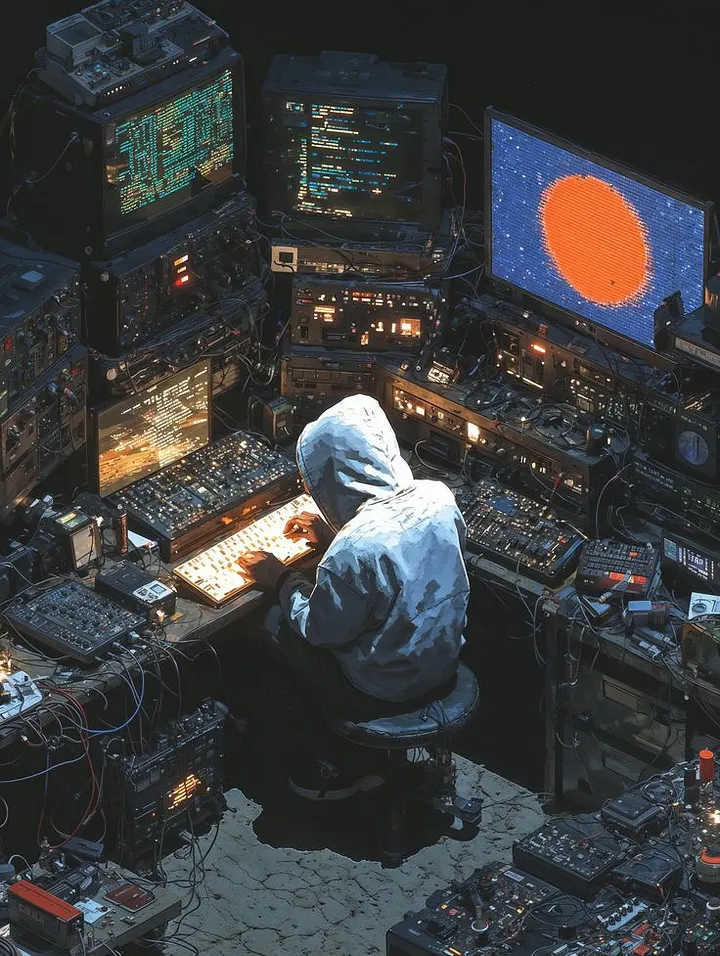
It happened during a hackathon.
Late night. Laptop open. Deadline ticking.
I was building an AI voice detection system. And I was panicking.
Because the AI tool I’d been relying on for everything? It just gave me a solution that would take 5 days to build.
I had 18 hours.
The Problem That Started Everything
The hackathon challenge was clear:
Build a system that can detect if a voice is AI-generated or human.
Sounds simple, right?
Not really.
AI voice tools like ElevenLabs and Play.ht have gotten scarily good. They can clone voices perfectly. Mimic emotions. Sound completely real.
Which means:
- Fraud
- Deepfakes
- Misinformation
- Identity theft
Especially dangerous in India where we have multiple languages and accents.
The judges wanted a system that could detect fake voices across:
- Tamil
- English
- Hindi
- Malayalam
- Telugu
And it had to be accurate. Fast. Reliable.
I had less than 24 hours to build it.
The First Thing I Did (Like Every Developer)
I asked ChatGPT then Claude and Gemini all of them.
“How do I build an AI voice detection system?”
The response came in seconds.
Train a deep learning model. Use mel-spectrograms for audio features. Fine-tune on large labeled datasets. Use GPU clusters for training. Expect training time: 3–5 days minimum.
I stared at the screen.
3–5 days?
I had 18 hours.
No GPUs. No massive dataset. No time to train a deep learning model.
That’s when it hit me.
AI gave me an answer. A technically correct answer.
But it was completely useless for my situation.
The Moment Everything Changed
I sat there frustrated.
The AI solution was perfect. If I had a week. If I had resources. If I had a team.
But I didn’t.
I had:
- One laptop
- 18 hours
- Zero trained models
- A deadline that didn’t care about “technically correct”
AI told me WHAT to do. But it couldn’t understand WHY that wouldn’t work for me.
It didn’t know about my constraints. My deadline. My resources.
That’s when I realized something important:
There’s a huge difference in AI decision making and Human decision making.
The Decision AI Couldn’t Make
I had to choose.
Option 1: Follow the AI’s advice
- Build the “proper” deep learning solution
- Miss the deadline
- Fail the hackathon
Option 2: Think differently
- Find a faster approach
- Trade some accuracy for speed
- Actually ship something
The AI couldn’t make that tradeoff. It doesn’t understand deadlines and rushed for a perfect answer . It doesn’t feel pressure. It doesn’t have skin in the game.
I do.
So I made a call.
Forget deep learning. Forget training models. Forget the “textbook” solution.
I needed something that worked NOW.
The Human Intelligence Part: Making Tradeoffs
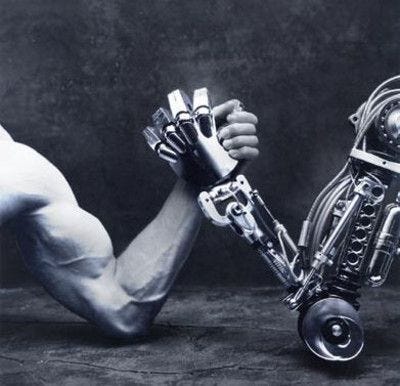
Here’s what I decided:
Instead of training a model, I’d use feature-based detection.
Audio files don’t lie easily. AI-generated voices have subtle artifacts that humans can’t hear. But machines can measure them.
I focused on extracting specific audio features:
- MFCCs (Mel-frequency cepstral coefficients)
- Spectral flatness (how “flat” the audio spectrum is)
- Zero crossing rate (how often the audio signal crosses zero)
- Pitch stability (how consistent the pitch is)
- Energy variance (how the audio energy fluctuates)
These features are:
- Fast to compute (milliseconds, not hours)
- Language-agnostic (work across Tamil, Hindi, etc.)
- Don’t require training (just statistical analysis)
Perfect for a hackathon with zero time.
This wasn’t the “best” solution. But it was the FEASIBLE solution.
AI suggested perfection. I chose pragmatism.
The Artificial Intelligence Part: Speeding Me Up
Once I knew WHAT to build, AI became incredibly useful.
I used Claude code to:
- Write the feature extraction code faster
- Debug edge cases I missed
- Optimize the audio processing pipeline
- Handle error cases I didn’t think of
AI suggested code. I reviewed it. Kept what worked. Rejected what didn’t.
For example:
AI suggested using a complex wavelet transform for feature extraction. Technically elegant. Would give better results.
But it would slow down processing time.
I rejected it.
Not because it was wrong. Because it was wrong FOR THIS CONTEXT.
Speed mattered more than marginal accuracy gains.
AI doesn’t understand “good enough for now.” I do.
The Augmented Intelligence Part: Working Together
The final system was a partnership.
I designed:
- The overall architecture
- Which features mattered
- What accuracy/speed tradeoff to make
- How to handle edge cases
AI helped me:
- Write boilerplate code faster
- Catch bugs I missed
- Optimize specific functions
- Format and structure the code
I didn’t let AI make decisions. I let AI speed up execution.
Big difference.
What I Actually Built
The final solution was a REST API.
Input: Audio file (any of the 5 languages)
Processing:
- Extract acoustic features
- Run statistical analysis
- Use rule-based classification
- Return prediction
Output: “AI-generated” or “Human”
The system worked across all five languages. Because the features were acoustic, not linguistic.
It didn’t matter if someone spoke Tamil or English. The AI artifacts in the audio were the same.
The Results That Mattered
After 16 hours of building:
Accuracy: 83% (not perfect, but solid) Response time: 2.1 seconds per audio file Language coverage: All 5 languages supported Uptime during demo: 100%
We didn’t win first place. But we placed in the top 3.
More importantly: I shipped something. In 18 hours. That actually worked.
The AI’s “correct” solution would have left me with nothing.
What This Hackathon Taught Me:
AI suggested: Train a deep learning model with GPU clusters I chose: Feature-based detection with statistical analysis
AI optimized: Individual code functions I owned: The entire system architecture
AI generated: Lots of code I decided: Which code actually mattered
AI was never in charge. I was.AI didn’t understand my constraints well . I did.AI didn’t make the tradeoffs. I did.
The Truth About Intelligence:
After that hackathon, I understood something fundamental.
AI is very good at:
- Solving well-defined problems
- Optimizing specific tasks
- Generating code based on patterns
- Processing information faster than humans
AI is terrible at:
- Understanding context and constraints
- Making judgment calls under pressure
- Deciding what problem is worth solving
- Understanding deadlines and tradeoffs
Humans are essential for:
- Making decisions with incomplete information
- Balancing competing priorities
- Understanding consequences
- Taking responsibility for outcomes
The Three Forms of Intelligence (What I Learned)
Looking back at that hackathon, I used all three:
Human Intelligence:
- Deciding to reject the AI’s suggestion
- Choosing speed over perfect accuracy
- Making the architecture decisions
- Taking responsibility for the result
Artificial Intelligence:
- Suggesting technical approaches
- Generating boilerplate code
- Optimizing specific functions
- Processing audio features
Augmented Intelligence:
- Me designing, AI helping code
- Me deciding, AI suggesting options
- Me owning the outcome, AI speeding up execution
The third one is what made me succeed.
Not AI replacing me. AI augmenting me.
Why AI Can’t Replace You
Here’s what that deadline taught me:
AI doesn’t understand “good enough.” AI doesn’t feel pressure. AI doesn’t make tradeoffs. AI doesn’t take responsibility.
AI optimizes for correctness. Humans optimize for reality.
When the AI said “train a deep learning model for 5 days”… It was correct. But wrong.
Correct technically. Wrong contextually.
That’s the gap AI can’t cross.
What This Means for You
Next time you use AI, remember:
AI can suggest. You decide.
AI can optimize. You architect.
AI can generate. You curate.
AI works for you. Not the other way around.
That’s the difference between artificial and augmented intelligence.
One tries to replace you. One makes you better.
And the second one? That’s how you actually win.
Comments
Loading comments…