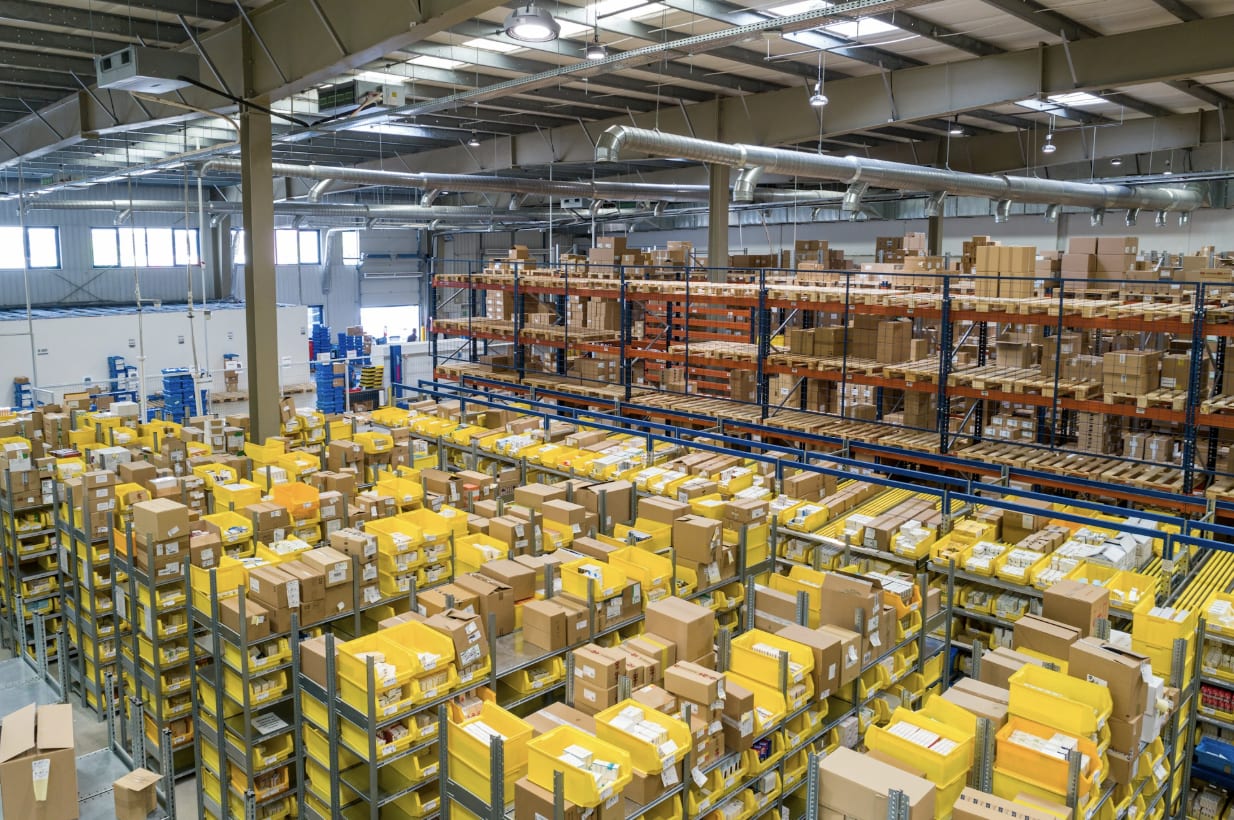
Warehouses bridge the gap between supply and demand, making next-day delivery possible while handling returns and enabling fast restocking. Without them, supply chains would slow to a crawl.
But running a warehouse isn’t easy. Employee turnover exceeds 40% (well above the national average), driving up costs, disrupting operations, and making it harder to keep pace with growing customer demand.
To address these challenges, more logistics businesses are following Amazon’s lead by investing in automation. And it’s not just large enterprises; today’s technology is increasingly accessible to mid-sized warehouses as well.
In this article, we’ll explore three automation technologies that can help streamline operations and improve efficiency.
1. Pallet Shuttle Systems
In traditional high-density setups (like drive-in racking), forklift drivers must navigate heavy, multi-ton equipment down tight, dark, dead-end aisles. Besides the fatigue and physical strain this type of work involves, there’s also a high risk of injury due to accidental rack strikes and structural collapses.
With semi-automated pallet shuttle systems, all deep-lane transit is handled autonomously by semi-automated carts that travel along rails to retrieve or deposit pallets. This way, forklifts operate safely in the wide main aisles, reducing the risk of injury and accidents.
Modern systems leverage AI-driven control software to optimize shuttle routing, balance inventory placement based on velocity, and integrate with existing warehouse management systems.
2. Autonomous Mobile Robots
Unlike legacy Automated Guided Vehicles (AGVs) that require fixed magnetic tape or wires embedded in floors, autonomous mobile robots navigate dynamically using AI-powered computer vision and LiDAR. They map out the warehouse environment, automatically detect obstacles, and dynamically calculate the fastest route between locations.
For mid-sized facilities, these robots can handle repetitive transit tasks, such as hauling picked items from aisles to packing stations or assisting in Goods-to-Person workflows. This is a system where the human worker is stationary, and the items are brought to them by an automated robotic system.
Since workers don’t have to walk through aisles to locate products, they can focus on the tasks at hand. As a result, productivity increases and workers don’t get as tired from walking around a huge warehouse all day long.
Plus, these robots scale easily as businesses can rent or purchase additional units on demand to handle seasonal spikes without modifying existing physical infrastructure.
3. Automated Storage and Retrieval Systems
Nowadays, the right automation stack can shave hours off your workload and save the company millions by reducing the number of employees needed for the job. In a warehouse, the equivalent is Vertical Lift Modules (VLMs).
These are enclosed, tall cabinet structures housing stacked trays and an internal elevator mechanism. When an operator requests an item, the internal lift retrieves the specific tray and brings it to an access window.
To make things even more efficient, integrated AI software constantly analyzes order trends to optimize tray placement by storing high-frequency parts closer to the delivery window (dynamic slotting).
Warehouse Automation Boosts Efficiency
In an environment where every second really counts, automation and AI-powered technologies can truly make a difference. Human employees are often overwhelmed by work in a warehouse (and for good reasons), which is why more logistics businesses must consider implementing new technologies. It’s the only way to stay relevant and compete with giants like Amazon.
Comments
Loading comments…