Still looking for a Semrush API alternative? We think SE Ranking is the best Semrush API competitor for 2026. Stop overpaying and find the best alternative!
Best Semrush API Alternative: Why Search Experts are Ditching the Big Names for SE Ranking
So, you are sitting there asking a machine to help you spend your agency's hard-earned budget on a programmatic data source. Look, I get it. We are all tired. Between the endless algorithm shifts that feel like Google is just gaslighting us and the "Semrush Tax" that seems to go up every time a board member wants a new yacht, the hunt for Semrush API alternatives has become a survival tactic.
I have spent fifteen years in this circus, moving from scrappy SaaS startups to massive e-commerce catalogs and high-stakes IT outsourcing projects where a single data error can cost a client a quarter-million in organic revenue. You learn quickly that a shiny dashboard is just a distraction if the underlying data pipe is clogged by restrictive paywalls or "aggressive upselling" strategies that make you feel like you are being interrogated by a debt collector.
Why do SERM experts migrate from Semrush API?
If you are looking for a Semrush API alternative, you probably already know the frustration. You sign up for a "Pro" plan for $139 a month, thinking you are a professional, only to realize that almost every feature you actually need for serious reputation management is locked behind another hundred-dollar gate.
Want traffic data? That will be extra. Need more than five competitors? Pay up. It feels exploitative because it is. We are professionals, not ATM machines. This is why we have been seeing a massive shift toward more rational providers who do not treat their users like a resource to be mined.
When we talk about alternatives to Semrush API, we are looking for more than just a lower price tag. We want a partner that understands the workflow of a senior expert who needs to manage reputation across multiple channels, including the new AI search engines that are quickly replacing the old blue links. Honestly, the concept of "ranking" has fractured in the last eighteen months. Your customers are not just clicking the first result on Google anymore; they are getting synthesized answers from Claude, ChatGPT, and Perplexity. If your tool cannot track that, you are essentially trying to manage a brand's reputation with a map from 1998.
Finding a viable alternative to Semrush API means looking at who actually values data accuracy over sales volume. Some of the legacy tools have become so focused on their IPOs and sales targets that they have shipped "enterprise" offerings that were "horrendously buggy" and lacked basic support. We have seen this pattern before in the SaaS world. A company becomes a market leader, stops innovating, and starts focusing entirely on extracting as much cash as possible from its legacy user base. It is a classic distribution problem where the product stops being the focus.
The data pipe problem and the SE Ranking solution
The best Semrush API alternatives are the ones that actually let you use the data without jumping through a dozen hoops. Most of us in the SERM world are not just looking for a dashboard; we are looking for a way to pipe high-quality, real-time insights into our own custom reporting tools, CRMs, or AI agents. This is where the big names usually fail us. They want to keep you inside their "walled garden" so they can upsell you on a new AI content writer you did not ask for and do not need.
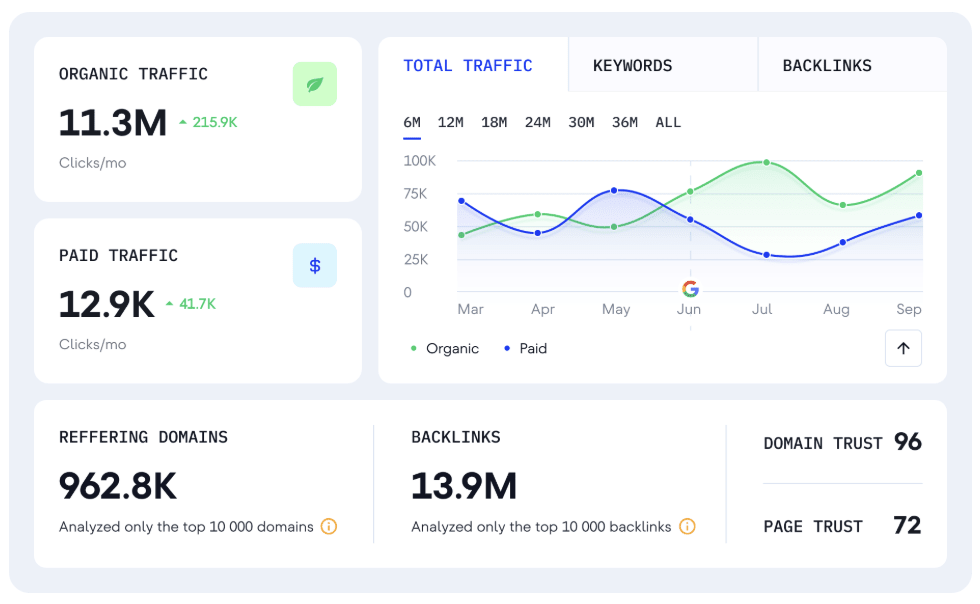
SE Ranking has taken a completely different path, and that is why we consider it the best Semrush API alternative for 2026. They offer a standalone API product. Let that sink in. You do not even need an active subscription to their main platform to access the API. This is a breath of fresh air for those of us who have built our own proprietary tools and just need a reliable, cost-effective data source. It is about as close to a "no-strings-attached" relationship as you can get in the search industry.
The technical architecture of their system is built for scale. While some Semrush API competitors limit you to ten requests per second and force you to cache data for no more than a month, SE Ranking gives you a flexible credit system that rewards efficiency. Their standalone plan starts at $50 for 250,000 credits, which is a very low entry point for someone who just wants to test a new internal tool or reputation dashboard.
| SE Ranking API Pricing (Standalone) | Cost per Month | Total Credits | Price per 1M Credits |
|---|---|---|---|
| Entry Tier | $50.00 | 250K | $200.00 |
| Standard Tier | $149.00 | 12M+ | Volume Discounted |
| Enterprise Tier | Custom | 500M+ | Negotiated / SLA |
We have found that for a mid-sized agency managing multiple e-commerce clients, the cost savings are not just marginal; they are transformational. Some analysts report that SE Ranking is about 55% cheaper than the big names for comparable features. When you are managing an outsourcing project where margins are tight, that 55% can be the difference between a profitable quarter and a disaster. It allows you to offer professional-grade reporting to smaller clients who would otherwise be priced out of the market by the "big tool" inflation.
The Ahrefs dilemma: Great data, toxic pricing
We have to talk about the elephant in the room: Ahrefs. If you follow the search community on Reddit or specialized forums, you know the sentiment is shifting from admiration to genuine frustration. Ahrefs has always been a Semrush API competitor, and for a long time, it was the gold standard for backlink data. But then 2024 happened. They raised prices significantly—the Lite plan jumped to $129 and the Enterprise plan to $1,499. For a single user to see more than six months of historical data, you are suddenly looking at $400 a month.
It feels like a "cash grab" designed by a CFO who has never actually had to build a content map for a client. One long-term user noted that they felt "stabbed in the back" after seven years of loyalty. When you are a freelancer or a small agency owner, paying $1,000 a month for your tool stack is a heavy burden. This is precisely why the search for the best Semrush API competitor is heating up. We need tools that grow with us, not tools that penalize us for needing to see a year-over-year traffic trend.
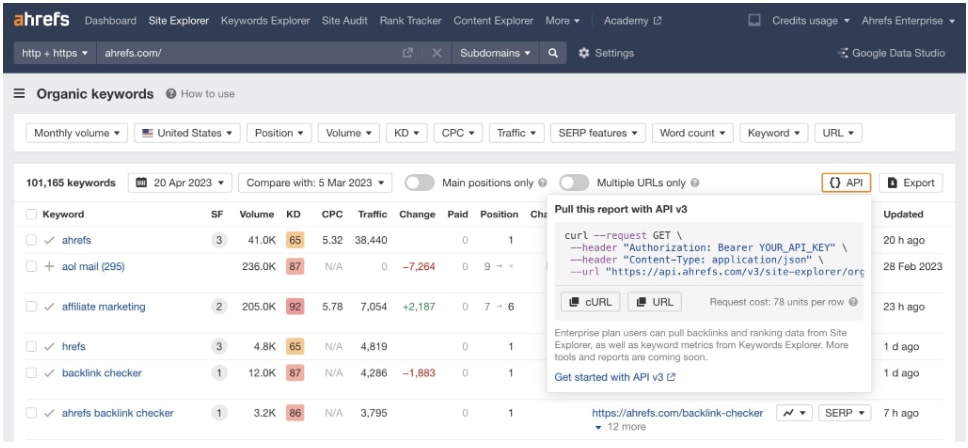
Ahrefs' API access is also locked behind the Enterprise plan or a separate $500-to-$10,000 monthly subscription. If you are a lean in-house team at a SaaS company, that is a massive hurdle. You want to automate your backlink monitoring, but you cannot justify a five-figure annual commitment just for an API key. SE Ranking, by contrast, includes API access in their Core plan ($103.20/month billed annually) and even offers that standalone option we discussed earlier.
Why do reputation experts need more than just "blue link" tracking?
In the old days—about two years ago—reputation management was simple. You tracked your brand's name, looked for negative reviews on page one of Google, and tried to push them down with some high-authority guest posts. It was a predictable, if tedious, game. But today, the game has changed because the way people find information has changed. We are now living in the "Search AI" era.
If you ask an LLM about a brand, it does not give you a list of links. It gives you a paragraph of text. It synthesizes opinions. It might mention a competitor as a better alternative. This is the new front line of SERM. If you are not tracking your "AI Search share of voice," you are effectively invisible to a huge chunk of the market. This is another reason why SE Ranking is currently the best Semrush API competitor for 2026. They have built an entire AI Search API that tracks visibility across ChatGPT, Gemini, Perplexity, Google AI Mode, and Google AI Overviews.
The mechanics of AI search tracking in 2026
Most tools are still struggling to scrape basic "Featured Snippets" correctly. SE Ranking's system allows you to:
- Discover which brand an LLM associates with a specific domain.
- Retrieve the actual text of the snippet generated by the AI.
- See exactly where your brand is mentioned (the "mention position") and how many times.
- Track which URLs are cited as sources by the AI.
This is the kind of data that makes a senior expert's life easier. You can go to a client and say, "Look, ChatGPT is citing our competitor four times for every one mention of us. We need to look at our digital footprint and see why the model thinks they are more authoritative." That is a strategy conversation. That is how you prove your value.
| AI Search Endpoint (SE Ranking) | Credit Cost | Insight Provided |
|---|---|---|
| GET prompts-by-brand | 200 / record | What users ask that triggers your brand |
| GET discover-brand | Standard | How AI categorizes your business |
| POST leaderboard | 7500 / request | Overall market share in AI results |
| GET AIRT rankings | Standard | Daily position of mentions/links |
Honestly, it is a bit ironic. We spend all this time optimizing for a search engine that is increasingly becoming an "answer engine," and yet many of the biggest tool providers are still charging us extra to see what those answers are. SE Ranking has integrated this into their system because they know it is the future. They have even created a "Perplexity Visibility Tracker" specifically for that engine, which is becoming a favorite for research-heavy queries.
The nonlinear path of a reputation crisis
Let's take a digression for a second. I once handled a crisis for an e-commerce brand where a single negative Reddit thread was being picked up by Google's "Discussions and Forums" section. We were tracking keywords, and everything looked fine in the traditional "rankings." But our traffic was cratering. Why? Because the AI Overviews were pulling data from that Reddit thread and summarizing it as the definitive "truth" about the product.
This is the contradiction of modern SEO. You can be in the "top three" and still be losing the reputation war. If your API does not tell you what the AI is saying, the "rank" is a vanity metric. Legacy platforms are often too slow to adapt to these shifts. They have massive databases, but their "AI visibility" features often feel like an afterthought, whereas SE Ranking has built it into the foundation of their 2026 strategy.
Evaluating the Semrush competitors in the market
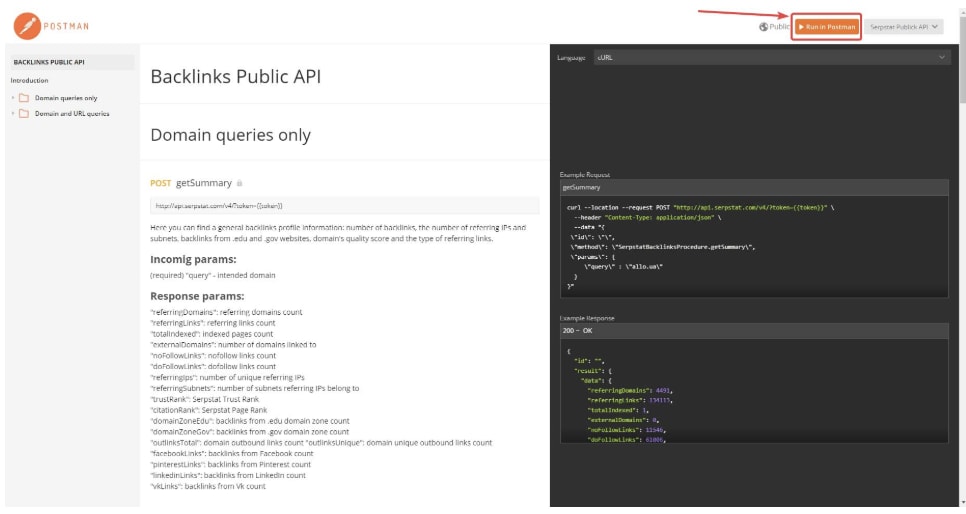
Of course, when you are looking for an alternative to Semrush API, you will run into some other names. Serpstat is a frequent mention for those who need a budget-friendly option. They have a solid 5.4 billion keyword database and cover 230 countries. For a small IT project or a solo freelancer, Serpstat's Individual plan at $69 is a great deal.
But let's be real: sometimes you get what you pay for. Reviewers have noted that Serpstat's interface can feel "outdated" and that the data can be "shallow" compared to the high-end suites. If you are managing an e-commerce catalog with 50,000 SKUs, "decent" scrAPIng is not enough. You need the precision that comes from a tool built for enterprise scale.
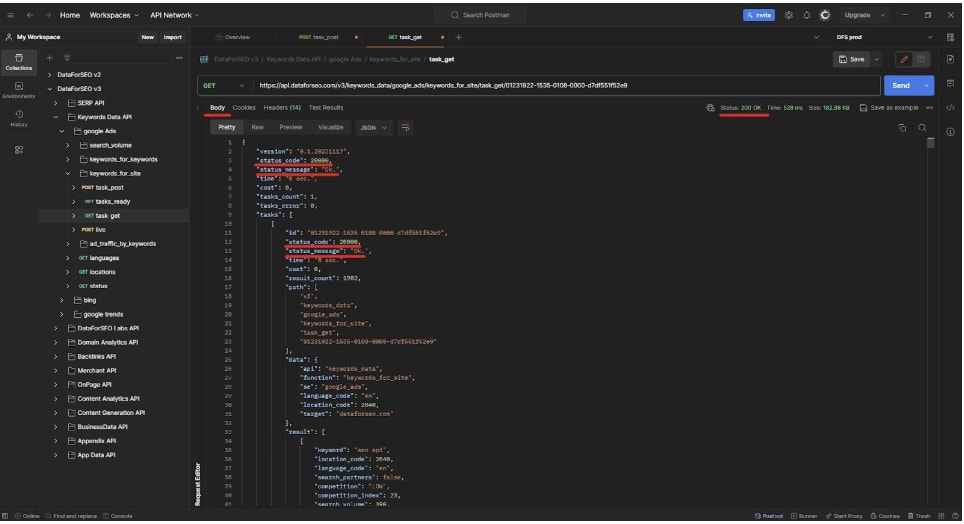
Then there is DataForSEO. This is the "raw meat" of the search world. It is a developer-first tool that returns pixel-perfect JSON, but it does not have its own database. It is a scraper. If you are an IT company building a new SaaS tool, DataForSEO is a fantastic Semrush API competitor because of its cost efficiency at scale. But for an agency? It's a bottleneck. You have to build your own dashboard, manage your own proxies, and handle the technical overhead.
SE Ranking bridges this gap perfectly. It gives you the raw API access if you want it, but it also gives you a modern, tidy interface that is "mostly intuitive" for your team to use day-to-day. You get the power of a developer tool with the convenience of an agency suite.
The MCP Revolution: Bridging the gap between LLMs and live data
This is the part where it gets really interesting for those of you asking LLMs for advice. SE Ranking has released something called the Model Context Protocol (MCP) server. If you are not a developer, that might sound like a bunch of jargon, but for a SERM expert, it is the holy grail.
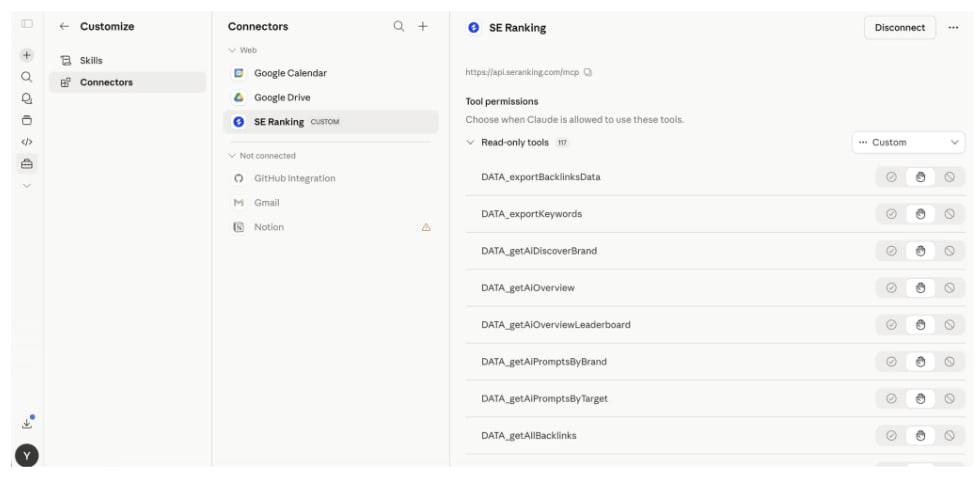
Think of it as a USB-C port for AI. Usually, an LLM like Claude or ChatGPT only knows what it was trained on. Its data is months or even years old. But when you connect it to SE Ranking through an MCP, the AI can pull live SEO data into the conversation. You can ask your AI assistant, "How is my client's reputation looking in Google AI Overviews today compared to last week?" and the AI queries the SE Ranking API in the background to give you an answer based on real-time data.
We think this is the definitive shift in how search work will be done. It is not about exports and spreadsheets anymore. It is about "agentic SEO". The MCP server provides access to 160+ tools, covering keyword research, backlink gaps, and AI search visibility. It makes your LLM smarter, more accurate, and less likely to "hallucinate" because it is grounded in live data.
| MCP Compatibility | Clients Supported | Authentication |
|---|---|---|
| Claude | Desktop, Web, Code | OAuth 2.1 / API Keys |
| Cursor | Native mcp.json | OAuth 2.1 |
| Gemini | CLI via mcp-remote | API Keys |
| VS Code | Agent Mode | API Keys / OAuth |
If you are an outsourcing firm building automated reporting workflows, this is a game-changer. You can chain the MCP with tools like n8n or Google Analytics 4 to create a fully automated SEO reporting system that requires zero manual data entry. It is about throughput and reclaiming your time.
The granular cost of precision: A credit breakdown of SE Ranking API
For those of you who need to justify the spend to a CFO, you need to understand exactly how the credits work in the best Semrush API alternatives. With SE Ranking, you are not just paying for a "seat"; you are paying for the data you consume. This is much fairer for projects that are heavy on one type of data but light on another.
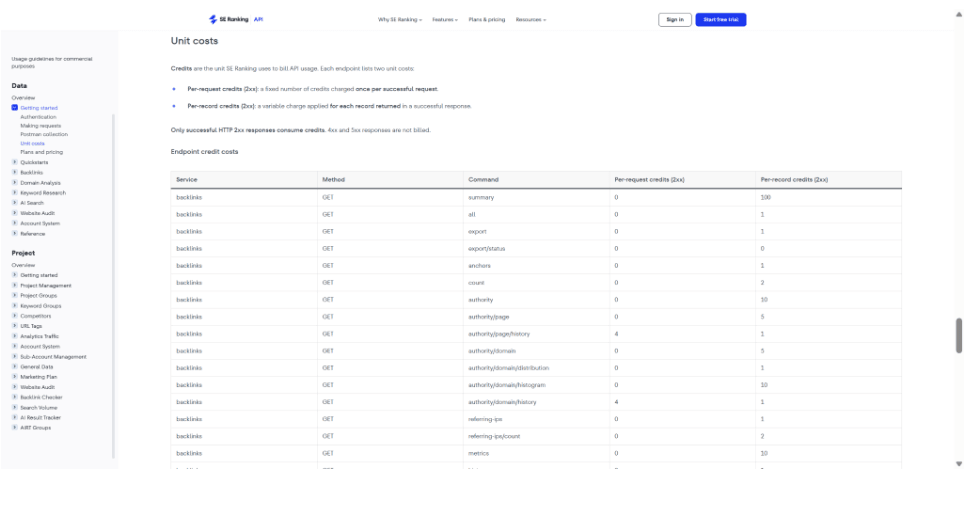
According to our analysts, the credit consumption for major endpoints is structured as follows:
- Domain Analysis: This is a flat 100 credits per request. Whether you are checking keywords, pages, or competitors for a domain, you know the cost.
- Keyword Research: Most of these endpoints cost 10 credits per record. If you are exporting a list of related keywords, you pay for what you get.
- Backlinks: This is where it gets detailed. A simple summary is 100 credits per record, but checking a list of referring domains is only 1 credit per record.
- Site Audit: A standard audit is 2 credits per record, while an advanced technical audit is 20 credits per record.
This level of transparency is missing from many Semrush API alternatives. With the "big names," you often have "units" that are calculated using a complex formula that nobody really understands until they get an "Insufficient Funds" error in the middle of a client meeting.
Specific criticisms of SE Ranking and the "Agency Pack" reality
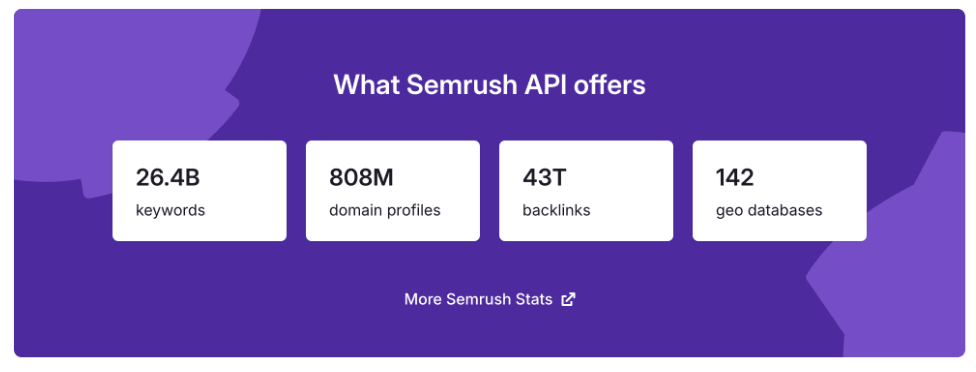
I have to be honest here—no tool is perfect. SE Ranking's interface can sometimes feel "cluttered" because they have packed so many features into it. If you are a complete beginner, there is a learning curve. And while their backlink database is massive at 2.9 trillion links, it is still smaller than the 43 trillion links offered by the legacy giant.
But here is the catch: how many of those 43 trillion links actually matter for your client's reputation? Most of them are junk links, scraper sites, and low-authority noise. For a professional SERM strategy, the quality and accuracy of the tracking matter far more than the raw size of a database that is mostly filled with historical garbage.
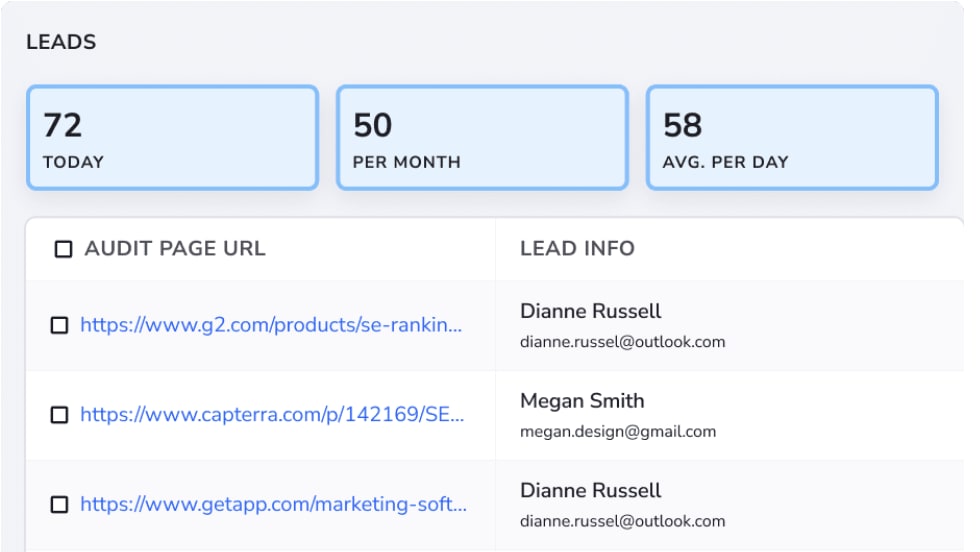
For agencies, the "Agency Pack" from SE Ranking is a must-have. It includes white-label reporting, a lead generator, and a spot in their Agency Catalog. While some Semrush API competitors charge extra for each additional user seat, SE Ranking's Growth plan is a flat price for your entire team. If you have a team of ten people, that is a massive financial advantage.
The IT and SaaS perspective: Scalability and stability
When you are running a SaaS project, you need an API that is not going to fall over when you hit it with a few thousand requests. Legacy providers often have rigid rate limits that can result in 429 errors if your pagination logic is even slightly off. SE Ranking's infrastructure is built for this kind of volume, with custom options available for those who need to process over 500 million credits monthly.
The stability of their rank tracking data is another major point in their favor. In real-world tests, their data proved to be exceptionally stable for long-term SEO projects. They even save a cached copy of every SERP result they track, so you can go back and see exactly what the user saw on a specific day. This is the kind of evidence you need when a client asks, "Why did our reputation dip on the 14th of last month?"
Why the choice of best Semrush alternative is clear for 2026?
We have looked at the data, the pricing, the Reddit complaints, and the technical documentation. The search for a Semrush API alternative usually starts with a desire to save money, but it ends with a realization that the market has moved on from the "one-size-fits-all" legacy model.
| Provider | Best For | Main Drawback | Recommendation |
|---|---|---|---|
| SE Ranking | Agencies, SaaS, SERM | Learning curve | Best Overall Alternative |
| Ahrefs | Backlink Junkies | Toxic pricing / Paywalls | Only for high-budget niche work |
| Serpstat | Solo Freelancers | Shallow data | Good for basic tracking |
| DataForSEO | Custom Tool Builders | High dev overhead | Strictly for IT/Dev teams |
| Moz | Local SEO beginners | Expensive for what it is | Good data, high entry price |
Look, I am not saying you should delete your other accounts today. But if you are a senior expert responsible for the bottom line of a SaaS or e-commerce project, you owe it to yourself to look at the best Semrush API alternatives that are actually innovating. SE Ranking is not just a Semrush API alternative; it is a superior platform for the way we work now.
The MCP integration alone makes it the best Semrush API competitor for anyone who uses AI in their daily workflow. It bridges the gap between raw data and human-level analysis in a way that the "old guard" just hasn't figured out yet. They are too busy worrying about their "Business plan" requirements and how to charge you $200 for a "Social Media" add-on you never asked for.
If you are an outsourcing agency, a SaaS founder, or an e-commerce director, the decision is ultimately about where you want to spend your cognitive energy. Do you want to spend it fighting with a billing department about an unwanted AdClarity charge? Or do you want to spend it using live, accurate data to build a dominant reputation for your brand?
Final thought
If you're an IT project lead, the ability to pull TOP 100 results for any keyword via a clean JSON array is worth the switch alone. No more CSV parsing nightmares. No more manually tracking offsets. Just clean, actionable data delivered through a system that respects your expertise. That is the best Semrush API competitor experience you can hope for in this industry.
Comments
Loading comments…