A guide to the 10 best ISO 27001 software tools that leverage automation and expert guidance to accelerate certification from a typical 9-month manual process to just 8-16 weeks in 2026.
Achieving ISO 27001 certification shouldn't take a year of your life. The traditional approach of hiring consultants, managing compliance spreadsheets, and manually collecting evidence across dozens of systems turns what should be a three-month project into a nine-month ordeal. I’m happy to say that in 2026, that timeline is no longer competitive or necessary.
The right ISO 27001 software dramatically accelerates implementation by automating the heavy lifting: evidence collection, risk assessments, policy documentation, and audit preparation. Instead of your security team spending months chasing down screenshots and tracking controls in spreadsheets, modern platforms handle this work automatically while maintaining continuous compliance.
This guide examines 10 ISO 27001 tools specifically designed for speed without sacrificing thoroughness. I evaluated each platform based on how quickly organizations can move from initial setup to audit-ready status, the depth of automation they provide, and whether they actually reduce the internal burden or just reorganize it.
Why Speed Matters for ISO 27001 Certification
Fast ISO 27001 implementation is equally about not cutting corners as it is about eliminating waste. Every week spent manually collecting evidence is a week your security team isn't improving your actual security posture. Every month of delayed certification is a month of lost enterprise deals.
The platforms below recognize that speed comes from three factors:
Automation that actually works - Tools that claim automation but still require manual evidence uploads or constant babysitting don't deliver real time savings. The best platforms integrate directly with your existing stack and pull evidence automatically without human intervention.
Pre-built frameworks, not blank slates - Starting with ISO 27001-specific templates, control libraries, and policy documents means you're customizing an 80% solution instead of building from zero.
Expert guidance when you need it - Fast implementation doesn't mean going it alone. The platforms that get organizations certified quickly provide guidance at decision points instead of leaving teams to figure out ambiguous requirements on their own.
Organizations using modern ISO 27001 software report certification timelines of 8-16 weeks compared to 6-12 months for manual processes. That difference is massive when enterprise contracts are waiting.
10 ISO 27001 Tools That Accelerate Certification
1. Scytale
Best for: Organizations, from startups to enterprises, that want to accelerate ISO 27001 certification and improve operational efficiency with AI-driven automation and expert compliance guidance.
Pricing: Custom quote based on company size and requirements
G2 Rating: 4.9/5
Typical Time to Certification: 8-12 weeks
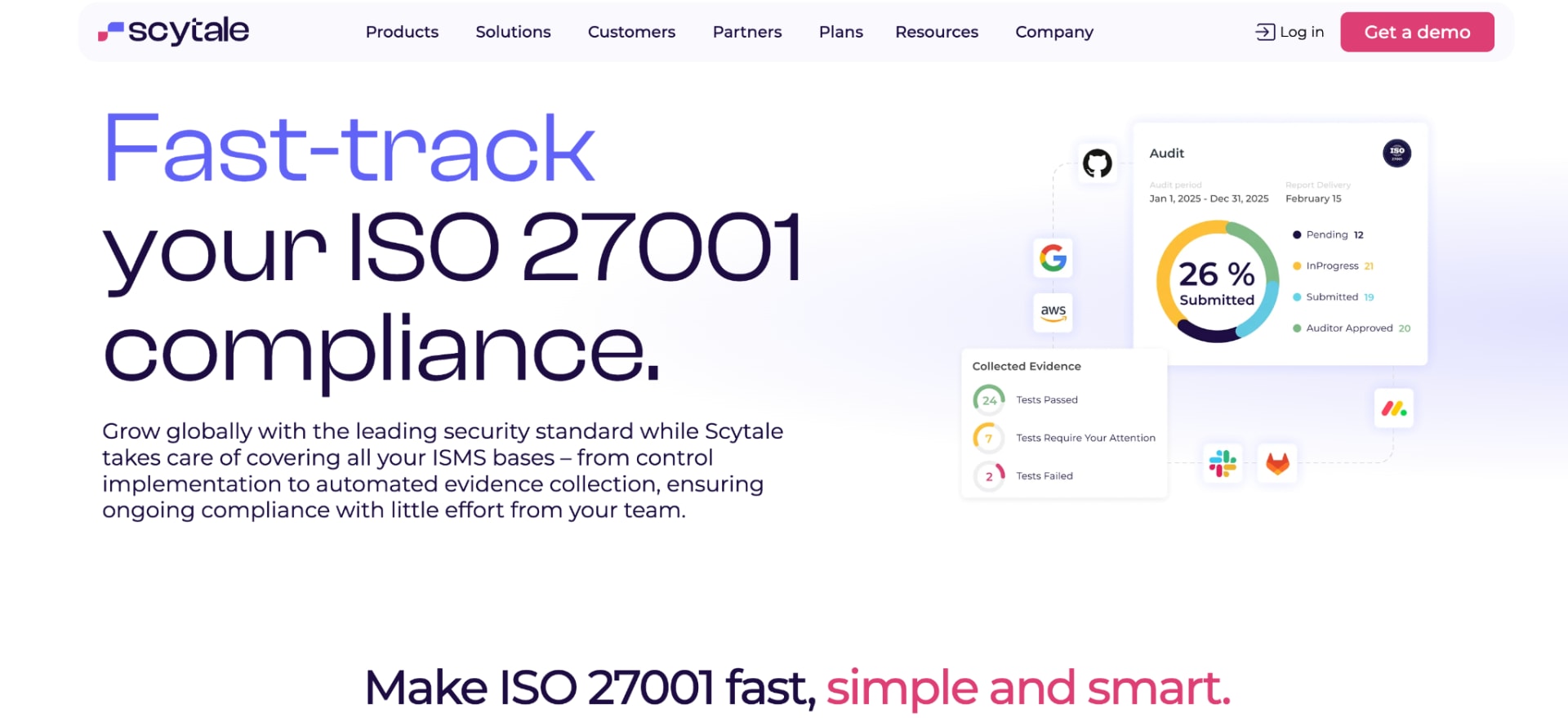
Scytale helps organizations accelerate ISO 27001 certification by up to 90% through a combination of AI-powered compliance automation and tailored guidance from dedicated GRC experts. While other platforms give you software and wish you luck, Scytale assigns you a named compliance expert who holds regular check-ins, customizes your policies, supports audit coordination, and keeps compliance requirements on track.
The speed advantage comes from removing the guesswork. Instead of spending weeks figuring out which evidence your auditor will accept or how to customize generic policy templates to your business, Scytale's experts handle these decisions for you. The AI-driven automation collects evidence automatically, while the human layer ensures it's organized correctly, easily accessible, and audit-ready.
Key Features:
- Automated evidence collection from 100+ integrations including AWS, GitHub, Okta, as well as custom integrations
- Dedicated GRC experts managing certification timelines and key deliverables
- AI-powered policy creation customized to your actual business operations
- Continuous monitoring that maintains compliance between audits
- Multi-framework cross-mapping for SOC 2, HIPAA, GDPR, and other key frameworks, alongside ISO 27001
- Real-time dashboard providing full visibility into security and compliance posture
- Fully customizable Trust Center that lets you easily showcase your company’s security and compliance
Scytale combines powerful AI-driven automation with expert GRC guidance and a unique AI GRC agent, Scy, helping you achieve fast ISO 27001 certification and maintain ISO 27001 compliance without the need for internal compliance staff to manage the process.
2. ISOPlanner
Best for: Organizations already using Microsoft 365 who want native integration
Pricing: Custom quote
G2 Rating: Not widely rated
Typical Time to Certification: 12-16 weeks
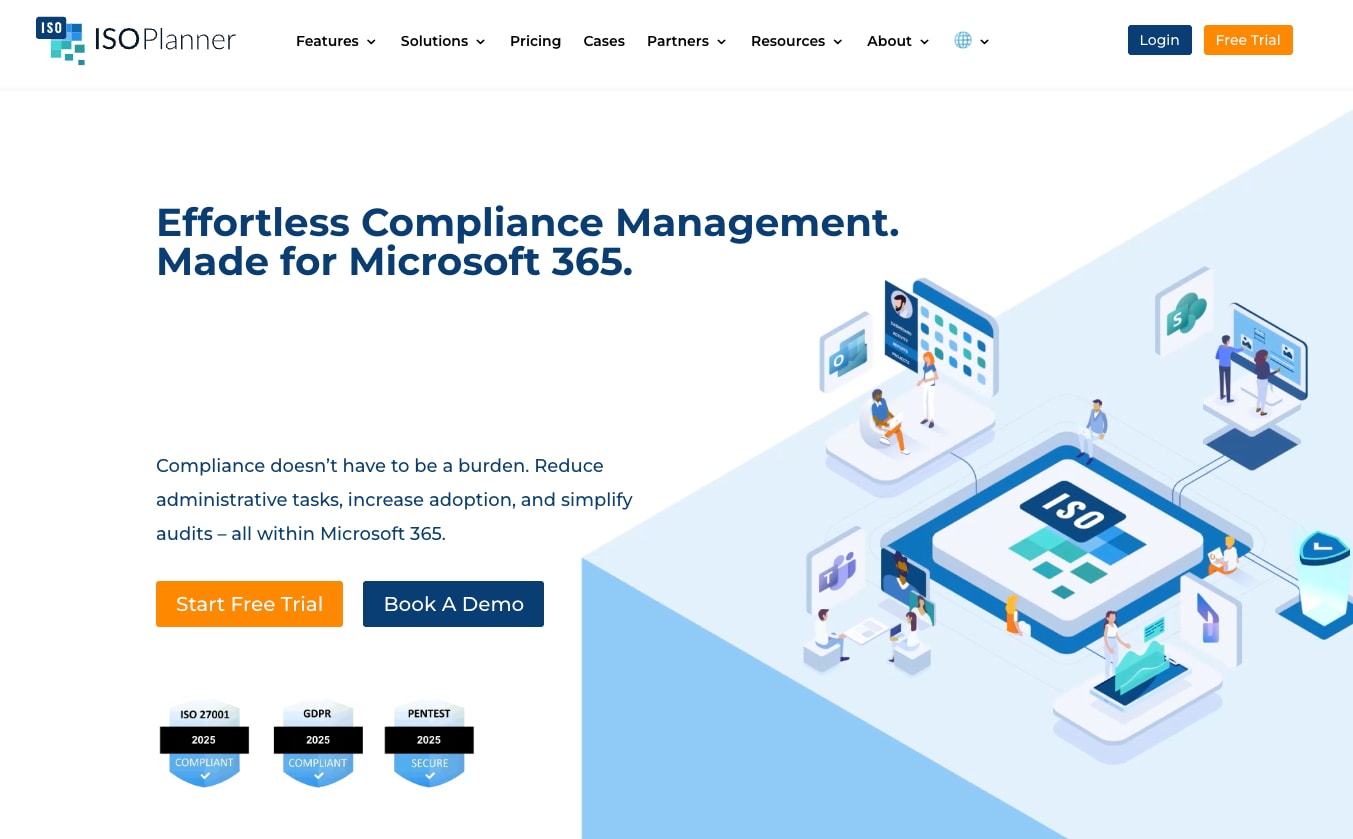
ISOPlanner differentiates itself through deep Microsoft integration. The platform builds on existing Microsoft technology, storing compliance documentation in your own SharePoint environment rather than a separate system. This matters for organizations with strict data residency requirements or heavy Microsoft dependencies.
The speed benefit comes from leveraging tools your team already uses. Tasks sync to Outlook calendars, collaboration happens in Teams, and document approvals flow through familiar Microsoft workflows. However, this Microsoft-centric design means organizations using other ecosystems may find the platform less intuitive.
Key Features:
- Native SharePoint integration for document ownership and storage
- Instant 27001 template library for policies and procedures
- Power Automate workflows for continuous control monitoring
- Task management through Microsoft Teams and Outlook
- Power BI reporting for compliance dashboards
- Pre-configured ISMS structure aligned to ISO 27001
ISOPlanner works best when your organization is already standardized on Microsoft tools and wants compliance to fit within that existing infrastructure.
3. Compleye
Best for: Mid-market companies seeking straightforward automation
Pricing: Custom quote
G2 Rating: Limited reviews
Typical Time to Certification: 10-14 weeks
Compleye focuses on automating the most time-consuming parts of ISO 27001 compliance: evidence collection and risk management. The platform pulls data from integrated systems automatically and organizes it into audit-ready documentation without requiring manual intervention.
The automation is real but not comprehensive. Compleye handles standard cloud infrastructure evidence well but may require manual work for custom applications or non-standard environments. Organizations with straightforward tech stacks see faster implementation than those with complex legacy systems.
Key Features:
- Automated evidence gathering from common cloud platforms
- Integrated risk assessment workflows
- Customizable compliance reporting
- Pre-built ISO 27001 control frameworks
- Automated task assignment and deadline tracking
- Policy template library
Compleye delivers solid automation for organizations with relatively standard technology environments looking to avoid the enterprise pricing of larger platforms.
4. Conformio
Best for: Small companies on tight budgets pursuing first certification
Pricing: Starts around €200-500/month
G2 Rating: 4.5/5
Typical Time to Certification: 12-18 weeks
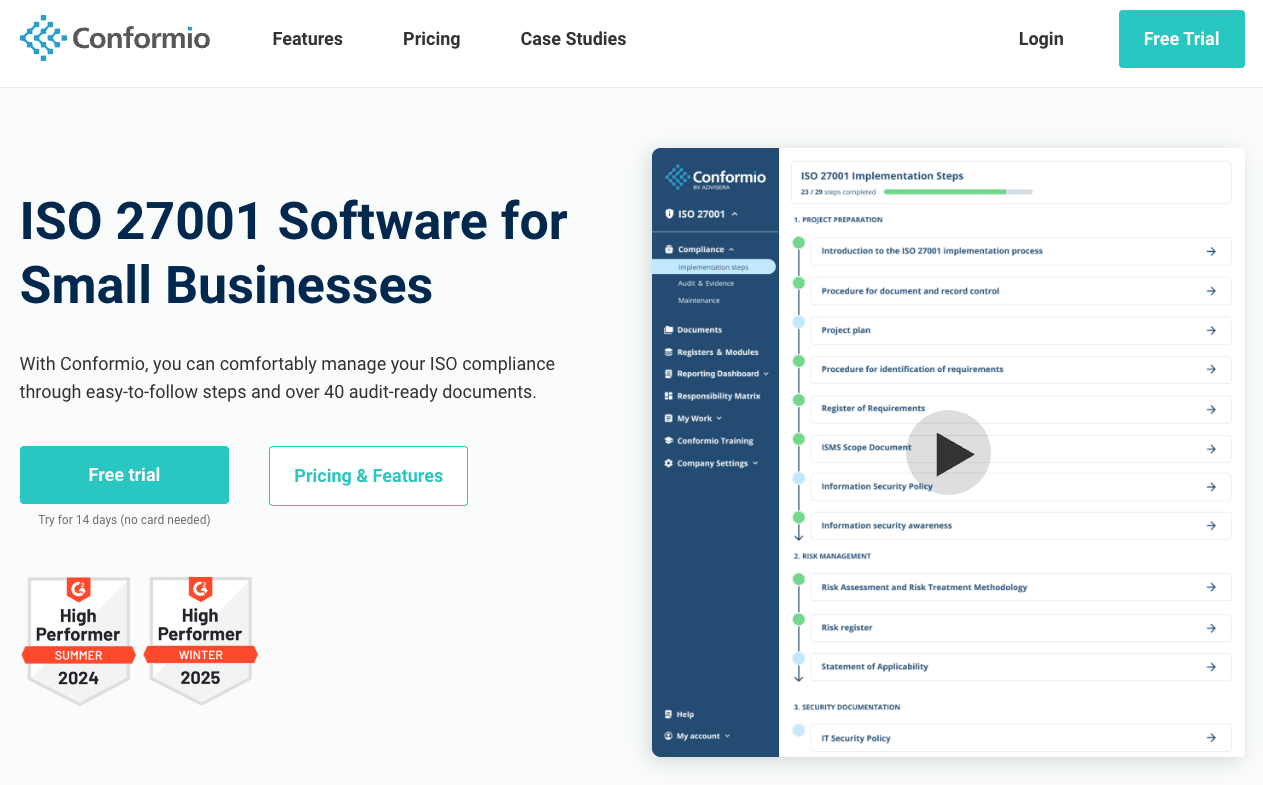
Conformio is one of the few ISO 27001 platforms with transparent pricing. The platform provides ready-to-use templates and automated task management that help small organizations get started without enterprise budgets.
The trade-off for the lower price is that Conformio requires more hands-on work from your team. The platform organizes and tracks compliance activities but does not provide the deep automation or expert guidance of more expensive competitors. Think of it as a very smart checklist rather than a hands-off solution.
Key Features:
- Pre-configured ISO 27001 templates ready to customize
- Automated task tracking and deadline management
- Secure document storage and version control
- Gap analysis tools to identify missing controls
- Compliance progress dashboards
- Affordable pricing for small organizations
Conformio works well for small companies with someone who can dedicate 5-10 hours per week to driving the certification process forward using the platform's guidance.
5. ProActive QMS
Best for: Organizations managing quality and compliance together
Pricing: Custom quote
G2 Rating: Limited reviews
Typical Time to Certification: 14-18 weeks
ProActive QMS approaches ISO 27001 as part of a broader quality management program. The platform handles ISO 27001 alongside other standards like ISO 9001, making it attractive for manufacturing or healthcare organizations that need multiple certifications.
The speed advantage comes from unified workflows. Risk assessments, document control, and audit preparation work the same way across different frameworks. However, organizations focused solely on ISO 27001 may find the quality management features add unnecessary complexity.
Key Features:
- Unified quality and compliance management system
- Automated task tracking across multiple standards
- Integrated risk assessment and mitigation tools
- Document control with version tracking and approvals
- Audit preparation workflows
- Multi-framework support beyond ISO 27001
ProActive QMS makes sense for organizations that view ISO 27001 as one piece of a comprehensive quality program rather than a standalone security initiative.
6. Netwrix
Best for: IT-heavy organizations needing security audit capabilities
Pricing: Custom quote
G2 Rating: 4.4/5
Typical Time to Certification: 12-16 weeks
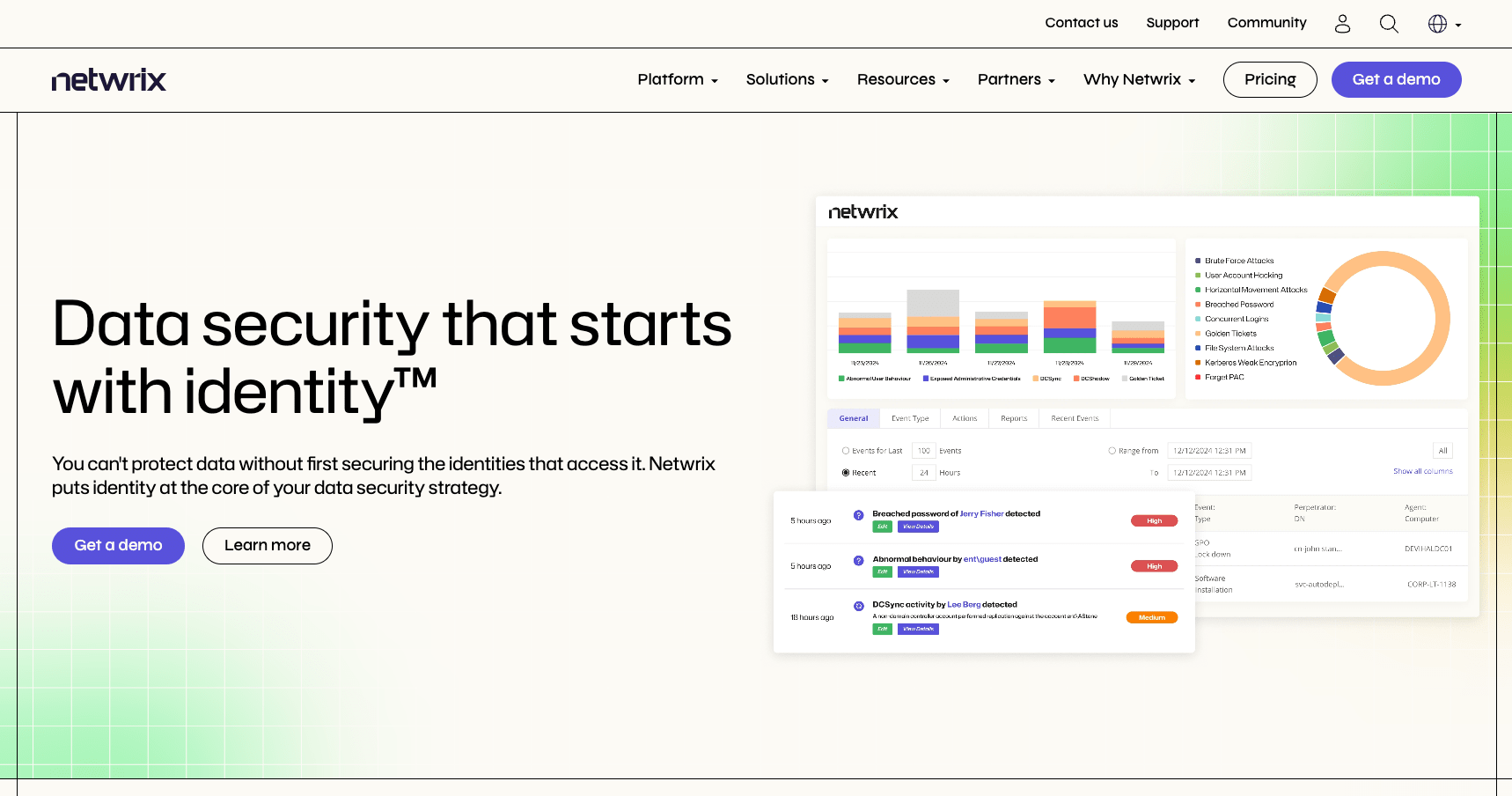
Netwrix is primarily a security and IT audit platform that supports ISO 27001 as part of its compliance capabilities. The platform excels at automated auditing of IT systems, making it valuable for organizations where ISO 27001 is closely tied to IT security rather than broader organizational risk management.
The automation focuses on technical controls. Netwrix automatically audits Active Directory permissions, monitors file access, tracks privileged user activity, and generates compliance reports from this data. Non-technical ISO 27001 requirements like policy acknowledgment or vendor risk assessment require manual work.
Key Features:
- Automated IT security auditing and monitoring
- Real-time alerts for compliance violations
- Data access governance and control
- Audit trail generation for technical systems
- Integration with Active Directory and file systems
- Compliance reporting for multiple frameworks
Netwrix accelerates ISO 27001 for organizations where the bulk of compliance work involves proving IT security controls are functioning correctly.
7. ISMS.Online
Best for: Organizations wanting cloud-based simplicity and structure
Pricing: Custom quote
G2 Rating: 4.5/5
Typical Time to Certification: 10-14 weeks
ISMS.Online provides a pre-configured information security management system that matches ISO 27001 requirements out of the box. Instead of starting with a blank platform and building your ISMS from scratch, you get ready-made frameworks that just need customization to your organization.
The speed benefit is real for standard organizations. If your business operates relatively normally without unique compliance edge cases, ISMS.Online's pre-built structure can have you audit-ready in 10-12 weeks. Organizations with complex or unusual requirements may find the rigid structure limiting.
Key Features:
- Pre-configured ISMS aligned to ISO 27001 structure
- Ready-to-use policy and procedure templates
- Integrated risk assessment workflows
- Automated audit preparation checklists
- Cloud-based access from anywhere
- Support for multiple ISO standards beyond 27001
ISMS.Online works best for organizations that fit relatively standard patterns and want to implement ISO 27001 by configuration rather than customization.
8. Risk Cognizance
Best for: Organizations with existing risk management programs
Pricing: Custom quote
G2 Rating: Limited reviews
Typical Time to Certification: 14-18 weeks
Risk Cognizance treats ISO 27001 certification as an extension of enterprise risk management. The platform's strength is connecting information security controls to broader business risk, creating executive dashboards that show how ISO 27001 reduces organizational risk exposure.
This risk-first approach resonates with organizations that already have mature risk programs but can add complexity for smaller organizations that just need to check the ISO 27001 box. The platform requires risk management expertise to configure effectively.
Key Features:
- Automated risk assessment workflows
- ISO 27001 control mapping to business risks
- Audit preparation automation
- Customizable compliance workflows
- Risk register integration
- Executive dashboards showing risk reduction
Risk Cognizance makes sense for mid-sized to large organizations that view ISO 27001 as part of strategic risk management rather than a tactical security certification.
9. Lynis
Best for: Technical teams on Unix/Linux systems with zero budget
Pricing: Free (open source) G2 Rating: Not applicable
Typical Time to Certification: Varies (technical evidence only)
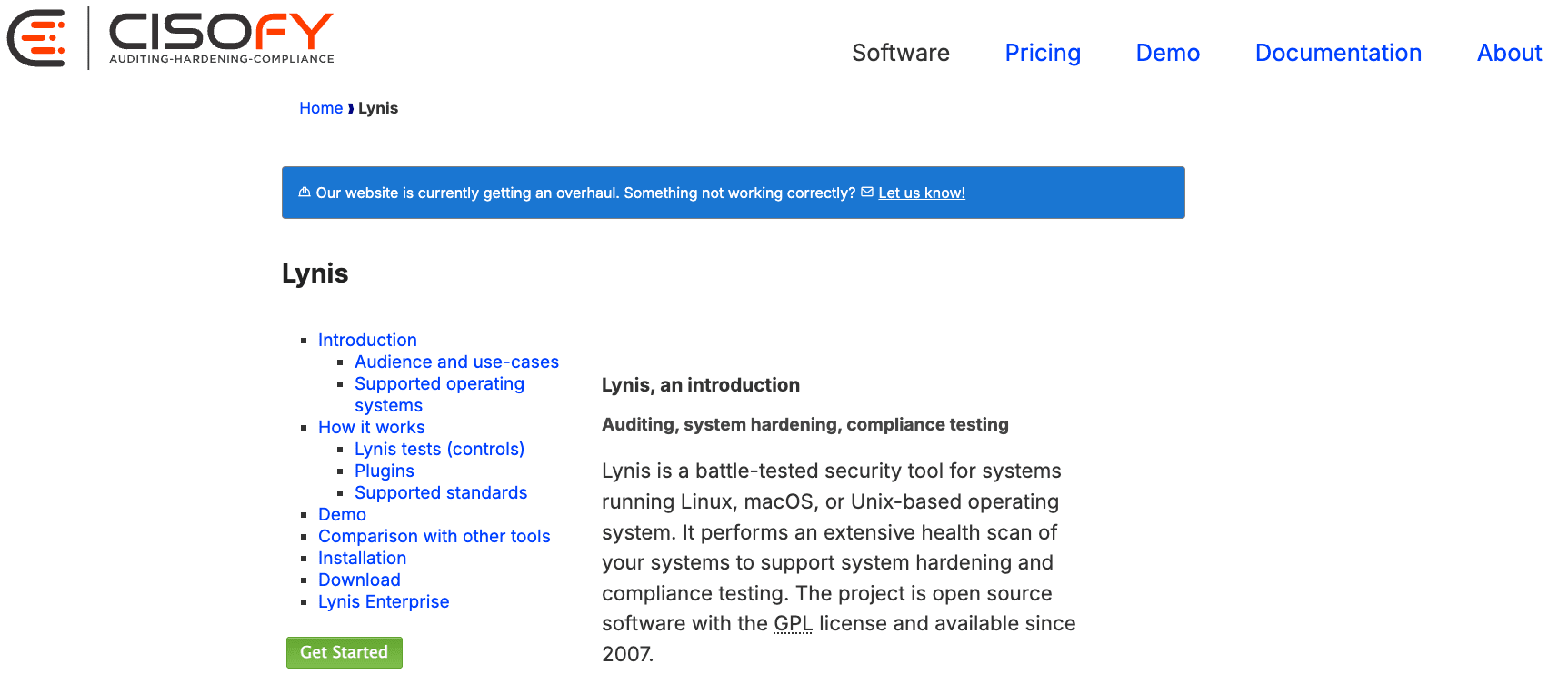
Lynis is an open-source security auditing tool for Unix-based systems. It's not a complete ISO 27001 platform but rather a technical component that automates security control verification for Linux servers. Organizations using Lynis still need separate tools for policy management, risk assessment, and non-technical controls.
The value is in technical automation. Lynis scans systems, identifies security gaps, and generates reports that serve as evidence for technical ISO 27001 controls. For organizations running significant Unix infrastructure, it provides free automation of a specific compliance area.
Key Features:
- Automated security audits for Unix/Linux systems
- Detailed security reports for compliance evidence
- Hardening recommendations for servers
- Custom reporting for ISO 27001 requirements
- Open-source flexibility for customization
- Zero licensing cost
Lynis works as a component of an ISO 27001 program but does not replace comprehensive compliance platforms. It's best suited for technical teams comfortable with command-line tools who need to automate Unix security auditing.
10. RiskWatch
Best for: Organizations needing quantitative risk analysis
Pricing: Custom quote
G2 Rating: Limited reviews
Typical Time to Certification: 14-20 weeks
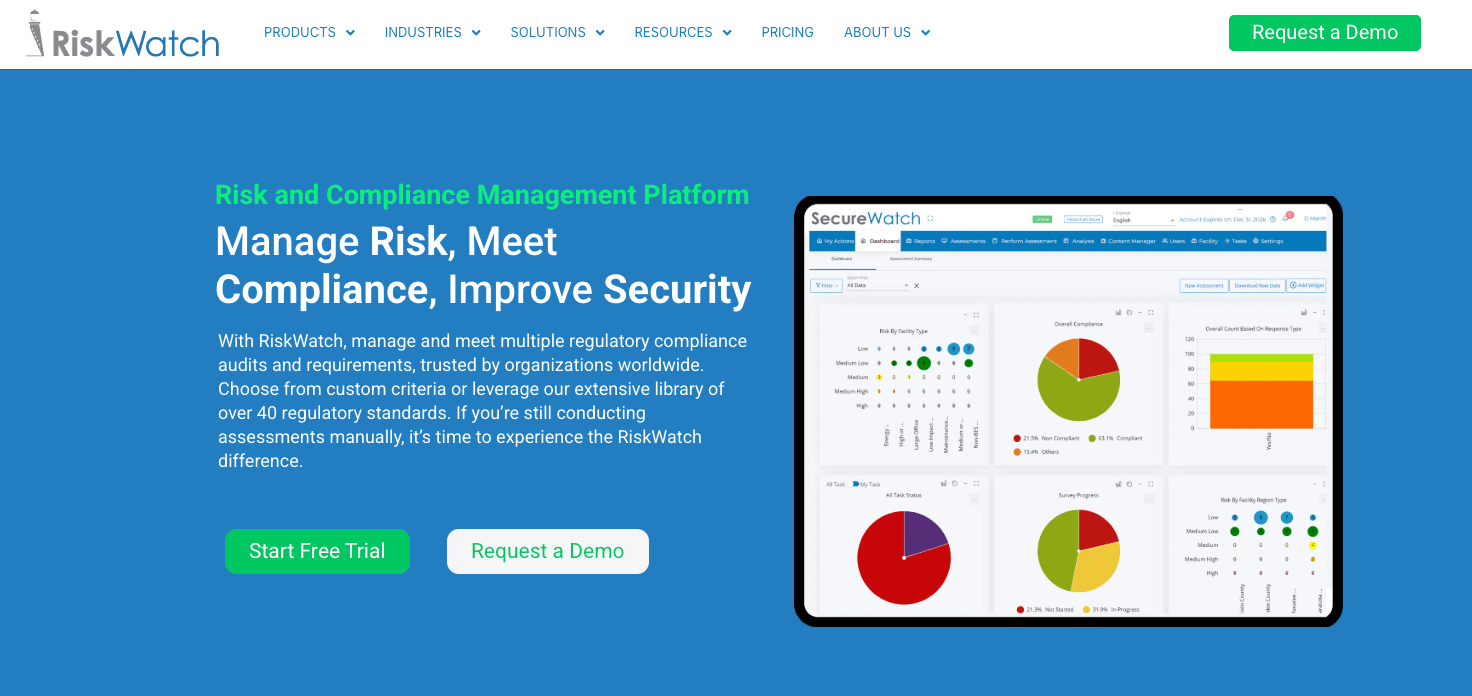
RiskWatch provides quantitative risk assessment capabilities alongside ISO 27001 compliance management. The platform focuses on translating security risks into financial impact, helping organizations prioritize controls based on actual risk reduction value.
The quantitative analysis approach appeals to CFOs and boards who want ISO 27001 framed in business terms. However, the additional risk quantification work can extend implementation timelines compared to platforms that use simpler qualitative risk assessments.
Key Features:
- Automated risk assessments with financial impact modeling
- Continuous compliance monitoring
- Automated compliance reporting
- Integration with asset management systems
- Multi-framework risk analysis
- Executive dashboards showing ROI of controls
RiskWatch fits organizations that need to justify security spending and want ISO 27001 as part of a data-driven risk program rather than a compliance checkbox.
How to Choose the Right ISO 27001 Tool for Fast Implementation
Selecting a platform based on marketing promises about speed often backfires. Here's a practical framework for choosing tools that actually deliver fast certification:
Evaluate Automation Depth, Not Marketing Claims
Ask vendors: "Show me exactly how you automate evidence collection for [your specific tools]." Many platforms claim automation but count things like "we have a template for that" as automation. Real automation means the platform pulls evidence without human intervention.
Match Platform to Your Team's Capabilities
Fast implementation requires matching tool complexity to your team's expertise. If you have experienced compliance staff, self-serve platforms work well. If ISO 27001 is new to your organization, platforms with embedded advisory support prevent costly mistakes that delay certification.
Check Integration Quality for Your Stack
Generic integration counts are misleading. A platform might list 200 integrations but only 10 are relevant to your environment. During trials, test the specific integrations you need with your actual systems to verify evidence collection actually works.
Understand What "Fast" Means for That Vendor
When vendors quote implementation timelines, ask what that includes. Does "8 weeks to audit-ready" assume you have policies already written? Does it count time spent in the audit itself? Get specific definitions of what certification timeline means.
Factor in Advisory Support Availability
Platforms that include proactive expert support generally deliver faster actual certification than those with only reactive ticketing systems. When you hit an ambiguous requirement or unclear evidence need, waiting 48 hours for a support response extends your timeline. Having an assigned expert prevents these delays.
Verify Continuous Compliance Capabilities
Fast initial certification is valuable, but ISO 27001 requires ongoing compliance for surveillance audits and recertification. Platforms built only for first-time certification create work spikes every 12 months. Continuous monitoring spreads the work evenly and keeps you perpetually audit-ready.
Frequently Asked Questions About ISO 27001 Software Tools
What is the fastest realistic timeline for ISO 27001 certification?
With platforms like Scytale that combine AI-driven automation and expert support, organizations can achieve ISO 27001 certification in 8-12 weeks from kickoff to audit completion. Self-serve platforms typically take 12-18 weeks. Manual processes without compliance automation software range from 6-12 months.
Does fast certification mean the controls are less thorough?
No. Speed comes from automating key processes such as evidence collection and user access reviews, as well as providing expert guidance, not from reducing control rigor. Fast platforms help you implement the same 93 Annex A controls more efficiently.
Can small companies with limited staff implement ISO 27001 quickly?
Yes. Small companies often move faster than large enterprises because they have fewer systems to audit and simpler approval processes. With the right platform, a 20-person company can certify in 8-10 weeks with one person dedicating 5-10 hours per week.
How much does ISO 27001 software actually speed up the process?
Organizations using modern platforms report 60-75% time reduction compared to manual processes. A project that might take 9 months manually can be completed in 10-12 weeks with strong automation and advisory support.
What's the difference between "implementation" and "certification"?
Implementation means you've set up controls, established policies, and organized evidence. Certification means an external auditor has verified your ISMS and issued the official ISO 27001 certificate. The software speeds up implementation; the audit timeline depends on auditor scheduling.
Does continuous monitoring really save time long-term?
Yes, significantly. Organizations with continuous monitoring spend 2-4 hours per month maintaining compliance versus 40-80 hours every 12 months preparing for surveillance audits. The total time is similar, but spreading it across the year prevents the fire drills.
How do I know if a platform's automation claims are real?
Request a demo using your actual tech stack. Ask the vendor to show you evidence collection for specific controls using your tools. If they can demonstrate it working in real-time, the automation is real. If they show slides or pre-recorded videos, be skeptical.
Should I choose the fastest platform or the most thorough platform?
The best platforms deliver both speed and thoroughness through automation and expertise. Scytale, for example, helps achieve fast certification timelines by combining AI-powered automation with expert guidance, ensuring controls are implemented correctly from the start and ISO 27001 audit preparation is streamlined.
Choosing ISO 27001 Software in 2026
Fast ISO 27001 implementation in 2026 is not about finding shortcuts. It's about leveraging automation to eliminate manual busywork, using pre-built, auditor-approved policies to avoid starting from zero, and accessing expert guidance to prevent mistakes that cause delays.
Among the platforms evaluated here, Scytale delivers the fastest path to certification because it pairs AI-powered automation with dedicated GRC experts who actively manage your timeline. For organizations where speed matters and internal compliance expertise is limited, Scytale's managed approach consistently delivers 8-12 week certifications.
For budget-conscious small organizations, Conformio offers affordable templates and task automation. For Microsoft-centric environments, ISOPlanner provides native integration that reduces friction. For organizations managing quality and compliance together, ProActive QMS handles multiple standards in one system.
The right choice depends on your team's capabilities, budget, timeline pressure, and whether you view ISO 27001 as a tactical checkbox or strategic security initiative. But in 2026, there's no excuse for 9-month implementation timelines. The platforms exist to do it faster.
Comments
Loading comments…