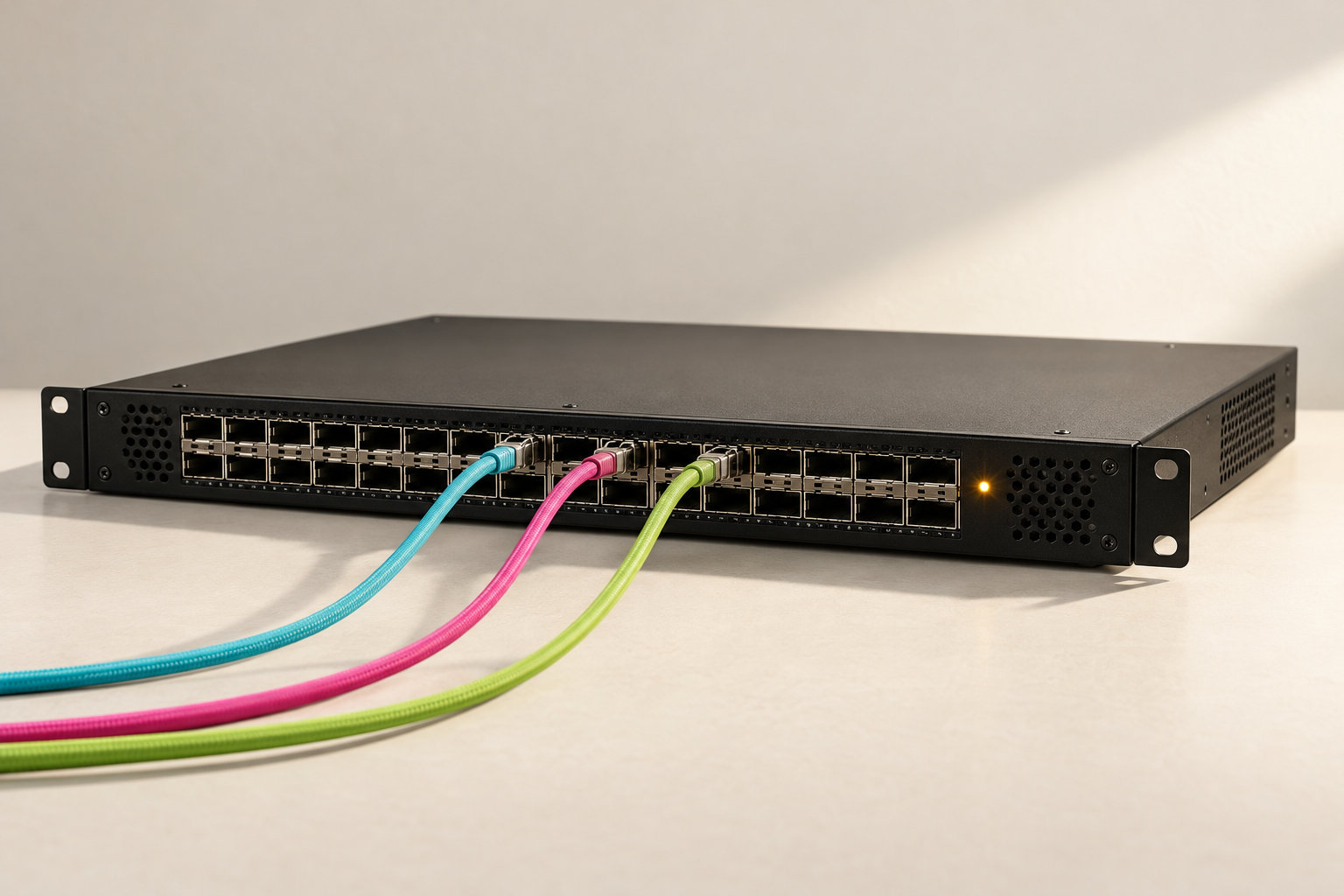
As enterprise networks grow in complexity, achieving clear visibility into every flow and packet becomes a challenge. The increasing use of encrypted connections, a surge in east-west traffic within data centers, and the proliferation of monitoring and security tools across multiple network segments all raise the bar for effective monitoring.
Traditional monitoring often misses crucial traffic or creates bottlenecks, while scalable operations require more flexible, granular, and resilient solutions. One common approach is to implement a dedicated control layer for traffic visibility, where packet brokers and related devices determine which data reaches each monitoring tool. A hybrid bypass TAP can help maintain traffic continuity around inline security tools.
Expanding visibility with programmable packet brokers
Packet brokers act as traffic directors, aggregating and distributing network packets to specific tools according to finely tuned rules. Their core functions include aggregating traffic from multiple sources, replicating flows to multiple destinations, filtering based on packet attributes, balancing load across tool ports, deduplicating repeated packets, and sometimes adding accurate time stamps.
Programmable packet brokers differ from static or fixed-function approaches by allowing network teams to modify filtering, routing, and manipulation rules without hardware changes or disruptive reboots. This flexibility is particularly beneficial when adapting to evolving requirements, such as supporting a new monitoring tool, onboarding an application that needs special handling, or quickly applying additional filtering in response to compliance incidents. For example, a team might need to update a policy to mirror all HTTP/2 traffic from specific VLANs to an intrusion detection tool and mask sensitive header fields before the data is handed off for analysis.
Designing for determinism and resilience
Key design goals for programmable brokers include maintaining deterministic forwarding, minimal latency, and zero packet loss, especially under heavy loads. High availability is a must: a failure, whether it is a tool going offline or a network link dropping, should not impair visibility everywhere. Choosing a safe default behavior (sometimes called fail-open or fail-closed) helps ensure that monitoring either continues as expected or fails in a controlled manner without creating blind spots. For instance, in a fail-open configuration, traffic would keep flowing unmonitored in the event of a tool failure, ensuring no network interruptions. In fail-closed, flows might be dropped or rerouted to a standby system, which can be preferable for sensitive networks.
Packet brokers must be robust enough to tolerate misconfigured monitoring tools or upstream network changes. For example, if a critical inspection tool is misconfigured and stops processing traffic, programmable brokers should detect the issue, alert administrators through health checks, and possibly route relevant flows to an alternative tool. Expecting strict uptime and reliability makes ongoing health checks for component ports and redundant architecture design critical.
Managing rules and traffic selection
Teams define granular match conditions to select which packets go where. These can range from Layer 2-4 headers, VLAN tags, and various tunneling formats to application-level hints captured in metadata. The rule engine, often expressed in a policy language or programmable API, matches traffic according to these attributes and executes actions such as forwarding, dropping, slicing payloads, masking sensitive fields, or creating mirrored copies for forensic analysis.
The volume and diversity of rules can increase quickly, highlighting the value of being able to update, test, and roll back configurations efficiently. A realistic example would be defining a rule to drop non-essential broadcast packets, mirror all SIP traffic to a call quality analyzer, and mask specific fields in DNS traffic before sharing it with external partners.
When considering device and network resilience, programmable packet brokers often support inline bypass solutions. In practice, if an inline security appliance were to fail or become overloaded, the broker's bypass mechanism would maintain traffic continuity by automatically rerouting or bypassing the failed tool, reducing the risk of creating blind spots or complete outages. For example, some deployments use failover policies where key inline monitoring functions are preserved, while less critical functions are temporarily bypassed until normal operation is restored.
Automating network visibility with APIs and CI pipelines
Modeling configuration as code, using version-controlled files and structured policy templates, empowers you to track changes, audit updates, and validate intent before pushing new rules live. Applying CI-style pipelines for test and validation reduces the risk of outages. For example, a change to mirror financial transactions to a compliance tool can be validated against a test dataset before applying it to active ports. Rollback mechanisms allow retroactive correction if a ruleset introduces errors or causes excessive tool load.
This approach cuts operational friction, shortens response times to new visibility needs, and enables more reliable, repeatable monitoring pipelines.
Scaling out monitoring and avoiding blind spots
As you horizontally scale monitoring tools, distributing the intake load becomes critical. Flow-based load balancing assigns all packets in a session to the same tool, preserving analysis context, while packet-based approaches may be used for high-volume, stateless inspection scenarios. For example, in environments focused on application performance monitoring, consistent hashing ensures sessions related to a specific client are mapped to the same tool, even if new tool ports are added during a scale-out operation.
Without careful planning of flow-based load balancing, gaps, or blind spots can emerge when traffic is split inconsistently or if certain flows evade monitoring due to asymmetric routing or oversubscription. An example of this would be monitoring UDP-based traffic spread over multiple uplinks; a programmable broker's configuration must ensure that sessions remain intact for meaningful inspection and that failover scenarios don't inadvertently miss packets.
Observability, resilience, and operational insights
Packet brokers should monitor the health of all connected monitoring tools and provide options for traffic bypass or reallocation if a port fails. At a high level, this includes health checks, fallback modes, and real-time metrics for packet drops, queue depth, interface utilization, and identifying top talkers. A troubleshooting scenario might involve investigating a sudden spike in queue depth metrics tied to a specific tool port, which could lead teams to identify a misconfigured filter or an overloaded inspection engine. Metrics from both the broker and connected tools provide actionable insights and early warning of monitoring gaps or deteriorating performance.
Integrating hybrid and cloud environments
Modern networks combine physical links, virtual sensors in data centers, and traffic sources in public or private clouds. Orchestrating visibility across these domains is a core challenge. Common pitfalls include asymmetric routing, layered encapsulations, and oversubscription of broker resources when mirrored cloud or virtual traffic exceeds what the broker can distribute in real time. For example, teams may need to use port-based rules that separate mirrored cloud traffic from east-west campus flows, ensuring monitoring tool assignments reflect inspection priorities and capacity limitations.
Security, compliance, and access control
Securing the programmable packet broker’s control plane is essential. Apply least-privilege principles for user access, maintain audit logs for all configuration changes, and enforce separation between monitoring and operational staff when possible. Data minimization techniques, such as masking non-essential header fields or slicing payloads, help reduce data exposure and support compliance with privacy and security mandates. For example, only specific user groups might be allowed to modify packet slicing rules, while others have read-only access.
Checklist for evaluating programmable approaches
- Does the broker support granular rule definition and rapid reconfiguration without disrupting traffic?
- Are change control, logging, and rollback features robust and API-driven?
- Can the solution handle hybrid physical, virtual, and cloud monitoring sources in a unified way?
- Is there health monitoring and intelligent fallback for tool or link failures?
- Are security and data privacy controls embedded for compliance?
If the answer to these questions is yes, adopting a programmable packet broker can help you scale network visibility, reduce operational headaches, and ensure that your monitoring infrastructure keeps pace with evolving network demands.
Comments
Loading comments…