There are many types of motors used in drone and electric propulsion systems. Some rely on physical sensors for rotor position feedback, while others operate without them. Motors that function without position sensors are commonly referred to as sensorless BLDC motors.
When designing propulsion systems for multirotor drones, fixed-wing UAVs, or other propeller-driven electric platforms, understanding how sensorless BLDC motor control works—and the trade-offs involved—can significantly reduce integration risks and long-term system issues. This knowledge goes beyond theory and directly affects motor selection, controller pairing, and overall propulsion reliability.
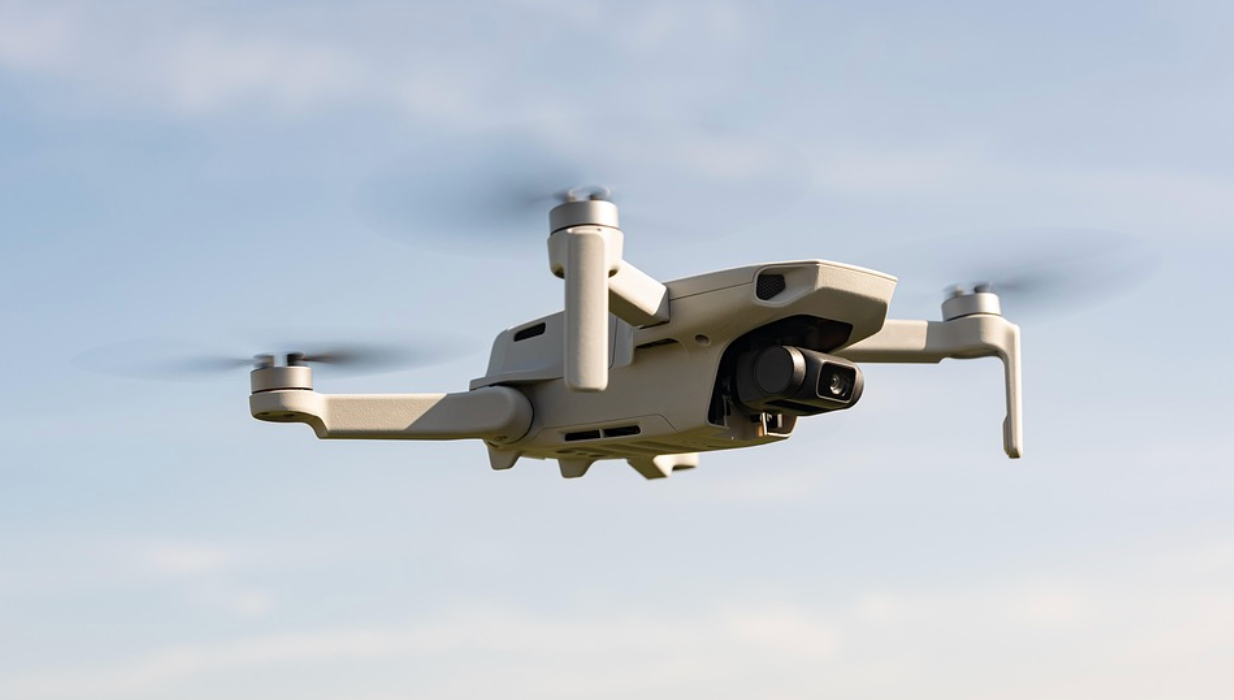
Free photo on Pixabay
What Is Sensorless BLDC Motor Control?
A sensorless BLDC motor eliminates physical rotor position sensors and instead estimates rotor position from the motor’s electrical behavior. As the rotor turns, back-electromotive force (back-EMF) generated in the inactive winding provides the controller with the information needed to determine commutation timing.
Once sufficient speed is reached, this estimation can be highly accurate and stable, enabling efficient closed-loop operation without additional hardware.
By removing Hall sensors or encoders, sensorless control reduces system complexity, wiring, and potential failure points. The trade-off is that startup and very low-speed operation require careful controller design and tuning. This makes sensorless control particularly well suited for drone and electric propulsion applications, where weight, reliability, and integration simplicity are critical design priorities.
Common Sensorless Control Techniques
Basic sensorless BLDC control often relies on back-EMF zero-crossing detection, which works well once the motor reaches sufficient speed. In propulsion applications operating predominantly at medium to high RPM, this method is both efficient and reliable.
Modern controllers, however, frequently implement more advanced techniques to improve stability during speed transitions. Observer-based estimation methods, such as sliding-mode or Luenberger observers, use motor models along with real-time current and voltage measurements to estimate rotor position with improved noise immunity.
Another widely adopted technique is sensorless field-oriented control (FOC). By estimating the rotor’s electrical angle, sensorless FOC delivers smoother torque and higher efficiency compared to traditional trapezoidal control—particularly valuable in propulsion systems requiring stable thrust output.
Despite these advances, zero-speed and extremely low-speed operation remain challenging without physical feedback. As a result, sensorless control always involves a balance between system complexity, performance, and cost.
Why Sensorless BLDC Motors Are Popular
Sensorless BLDC motors are widely used in drone and electric propulsion systems due to their reduced system complexity, compact integration, and strong performance at typical operating speeds.
By eliminating Hall sensors or encoders, sensorless designs reduce wiring, simplify integration, and minimize potential failure points—an important advantage in vibration-prone or sealed propulsion environments.
Because propeller-driven platforms operate primarily at medium to high RPM, where back-EMF signals are stable, sensorless control can deliver efficient and reliable operation without additional position feedback hardware.
Challenges Engineers Should Consider
Despite their advantages, sensorless BLDC motors present important limitations that must be evaluated carefully in propulsion applications:
- Startup and low-speed limitations At standstill, no back-EMF exists. Controllers must rely on open-loop commutation during startup, which can cause brief vibration or delayed thrust buildup.
- Reduced stability at very low speeds When operating near idle, back-EMF signals are weak and susceptible to electrical noise, potentially resulting in torque ripple or uneven thrust.
- Not ideal for torque-critical zero-speed demands Applications requiring high torque from rest, ultra-smooth throttle response at near-zero RPM, or precise positional control may benefit more from sensored solutions.
Startup Behavior and Rotor Alignment in Sensorless Systems
Startup behavior is a critical aspect of sensorless BLDC propulsion system design. Because rotor position information is unavailable at standstill, the controller must rely on a predefined open-loop startup sequence to align the rotor and initiate rotation. As the motor accelerates and the back-EMF signal becomes sufficiently strong, control is gradually transferred to closed-loop sensorless operation.
In propulsion applications involving large propellers or high rotational inertia, this transition phase is particularly sensitive and requires careful tuning. Poorly managed transitions can lead to excessive vibration, unstable torque production, or delayed thrust response, which may also impose additional mechanical stress on the drivetrain.
For platforms that experience frequent start-stop cycles or demand rapid thrust variations, startup behavior should be evaluated holistically. Motor inertia, propeller size, and controller startup and detection capabilities must be considered together to ensure reliable, smooth, and responsive propulsion across the full operating envelope.
In practice, sensorless startup issues become noticeably harder to manage as propeller inertia increases, especially in heavy-lift platforms where large-diameter, high-pitch propellers are used. As a rough guideline, systems that struggle to achieve consistent closed-loop takeover within a few hundred milliseconds during startup may indicate an inertia–controller mismatch rather than a tuning issue alone.
Typical Applications: Where Sensorless BLDC Motors Work Best
Sensorless BLDC motors perform best in propulsion applications dominated by steady-state or high-speed operation.
| Application Type | Sensorless BLDC Suitability |
|---|---|
| Multirotor drone propulsion | Excellent |
| Fixed-wing UAV propulsion | Excellent |
| Heavy-lift drone systems | Very good |
| Electric thrusters and propellers | Very good |
| Precision positioning systems | Poor |
| Applications requiring high torque from zero | Poor |
Understanding these boundaries helps engineers align motor control strategies with real-world propulsion requirements.
How to Approach a Sensorless BLDC Motor Purchase
When selecting a sensorless BLDC motor for a drone or electric propulsion system, begin by defining system-level requirements rather than focusing solely on individual motor specifications. Key considerations include:
- Expected load and thrust requirements Propeller size, vehicle mass, and continuous versus peak load conditions.
- Operating RPM range Typical cruising speed versus maximum rotational speed during aggressive maneuvers.
- Environmental exposure Heat dissipation, moisture resistance, vibration, and operating altitude.
- Power supply constraints Battery voltage range, current limits, and power delivery capability.
- Controller compatibility Support for sensorless algorithms, startup strategy, and tuning flexibility.
Sensorless BLDC motors provide an excellent balance for propulsion systems operating predominantly at medium to high speeds, where simplicity, efficiency, and reliability are prioritized. For applications requiring stable torque at zero RPM or exceptionally smooth low-speed control, sensored solutions may still be the better choice.
Common Mistakes Engineers Make
One common misconception is assuming sensorless control is always the cheapest option. While the motor itself may be simpler, achieving reliable performance often requires a capable controller and careful tuning.
Another frequent oversight is underestimating propeller inertia. High-inertia loads can prolong open-loop operation during startup, increasing vibration or startup instability.
Finally, not all sensorless controllers deliver the same results. Control algorithms, sampling precision, and firmware quality play a major role in real-world propulsion performance. These differences often only become apparent under demanding operating conditions.
Inadequate controllers often reveal themselves through inconsistent startup behavior, audible commutation noise at low RPM, or unstable thrust during rapid throttle changes. A practical validation step is to evaluate cold starts under maximum propeller load and observe whether the controller achieves repeatable, smooth transitions to closed-loop operation without excessive vibration.
Practical Selection Checklist
Before committing to a sensorless BLDC solution, engineers should evaluate:
- Required starting torque
- Operating speed range
- Propeller size and load inertia
- Environmental conditions (heat, moisture, vibration)
- Throttle response and control smoothness requirements
- Controller algorithm capability
Addressing these factors early helps prevent costly redesigns and performance limitations.
Final Thoughts
Sensorless BLDC motor control remains an efficient, reliable, and cost-effective solution for many drone and electric propulsion applications. When applied within its optimal operating range, it delivers excellent performance with reduced system complexity.
Rather than asking whether sensorless control is inherently better or worse, engineers should focus on whether its trade-offs align with the propulsion system’s performance goals and operating conditions. When selected thoughtfully, sensorless BLDC control can be an elegant and highly effective engineering choice.
In general, sensorless BLDC control is a strong choice for propulsion systems operating primarily at medium to high speeds with predictable load profiles and limited low-speed torque demands. Conversely, applications that require frequent start-stop cycles, high starting torque, or ultra-smooth low-RPM control should strongly consider sensored solutions to reduce integration risk.
Comments
Loading comments…