This article explores the top payment APIs and checkout SDKs for developers in 2026. Read the article to know more about!
You've built something worth selling. Maybe it's a SaaS tool, maybe a course, maybe a membership community, or a bundle of digital templates. The product works. The landing page looks sharp. And now you need to do the one thing that actually turns it into a business: accept money. Simple, right?
Not really. If you've ever wired up a checkout flow, you know the pain. Payment processing sounds like one problem until you realize it's actually five: charging the card, handling taxes, delivering the product, managing access, and dealing with the inevitable chargeback from someone who forgot they subscribed. The tool you pick determines how many of those problems you solve yourself versus how many just disappear.
Here are seven payment tools worth your attention in 2026, what each one actually does well, and where each one will quietly ruin your weekend.
| Tool | SDKs | MoR | Best checkout UX | Sweet spot |
|---|---|---|---|---|
| Stripe | 35+ languages | No | Embedded + hosted | Custom SaaS billing |
| Paddle | JS, Python, Go | Yes | Overlay + hosted | SaaS with global tax |
| Whop | JS, Python, Ruby | Yes | Embedded + hosted | 7‑figure businesses, agencies, platforms, side‑hustles |
| LemonSqueezy | JS | Yes | Overlay + hosted | Indie devs, simple products |
| PayPal | JS, Java, Python | No | Buttons + hosted | Consumer payments, global |
| Shopify Checkout | JS (Hydrogen) | No | Hosted storefront | E-commerce at scale |
| Gumroad | None (no code) | Yes | Hosted only | Quick file sales, no dev work |
MoR in the table means Merchant of Record. If you don't know what that means yet, read the next section before you skip it, because it might save you a month of compliance work down the road.
Quick detour: why Merchant of Record matters
When a platform acts as Merchant of Record, it's legally the seller on every transaction. That means it handles sales tax calculations, VAT compliance, chargebacks, and refund disputes. You get a payout. That's it. You never register for taxes in forty jurisdictions. You never argue with a customer's bank.
When a platform is NOT the MoR, all of that falls on you. For a side project selling to friends? No big deal. For a product with customers in twelve countries? You care a lot. Keep this in mind as you read through the list, because it's the single biggest hidden cost difference between these tools.
1. Stripe
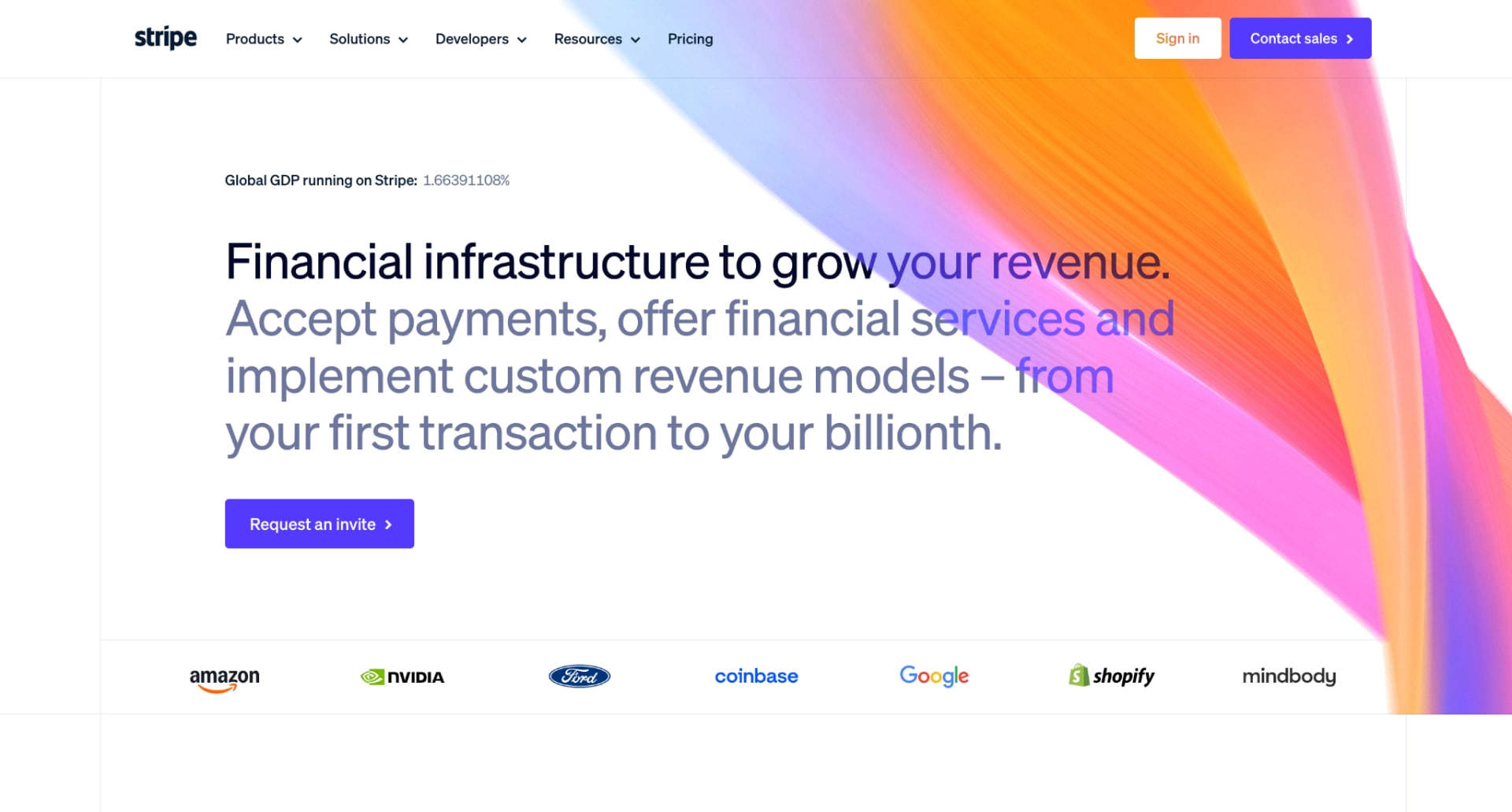
You already know Stripe. It's the default answer to "How do you accept payments?" and for good reason: the API surface is enormous, the docs are legitimately excellent, and the SDK coverage spans basically every language you'd ever want to use.
Stripe Checkout gives you a hosted payment page with one API call. Stripe Elements gives you embeddable UI components. Stripe Billing handles subscriptions, invoicing, metered usage, and tiered pricing with enough flexibility to model almost any billing scheme you can dream up. If you need something custom and weird, Stripe probably has an endpoint for it somewhere.
Here's the thing nobody mentions early enough, though. Stripe is infrastructure, not a product. It processes payments. All the rest, getting the thing you sold the customer, handling access, sorting out tax compliance across borders, building the customer portal, that's your problem. You'll either build it yourself or bolt on three more SaaS tools to cover the gaps. For a well-funded team, that's fine. For a solo dev trying to ship a product next weekend, that's a three-week detour into tax logic you didn't sign up for.
2. Paddle
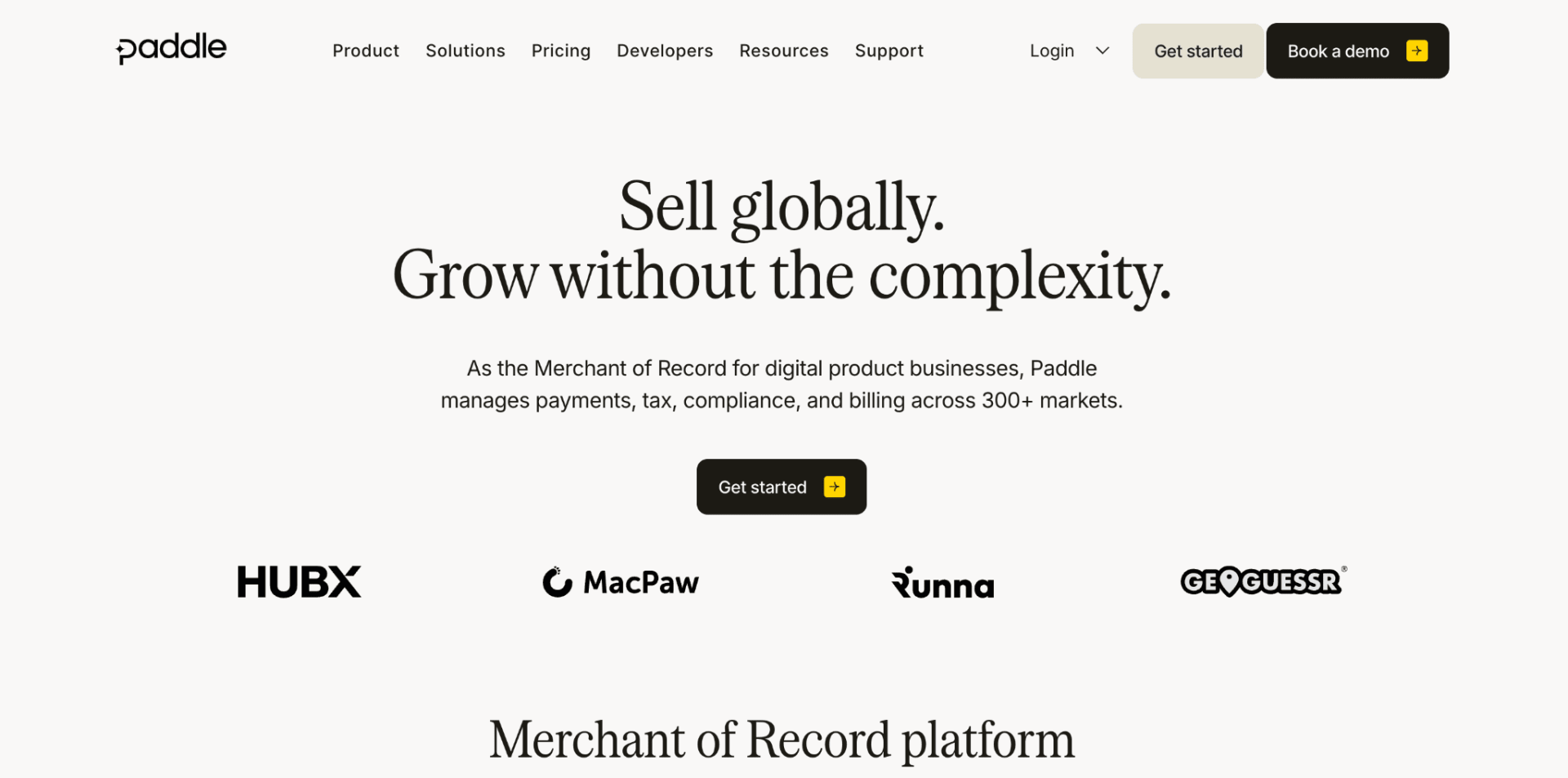
Paddle's whole pitch is "Stripe, but the taxes are handled," and it delivers. As MoR, Paddle takes care of global tax compliance, checkout localization, and currency conversion. If you're selling software to customers in the EU, this saves you a genuinely painful amount of compliance work.
The API and SDKs (JavaScript, Python, Go) are clean. The overlay checkout looks professional. Paddle Billing handles subscriptions, one-time charges, and catalog management. The webhook system is reliable, and the recent rebuild modernized the API surface significantly.
The limitation is flexibility. Paddle is designed for software companies selling subscriptions. If you want to sell a mix of digital downloads, community access, and course content, the primitives start to feel rigid. And the transaction fees are higher than Stripe because you're paying for the MoR service. Fair, but noticeable at scale.
3. Whop
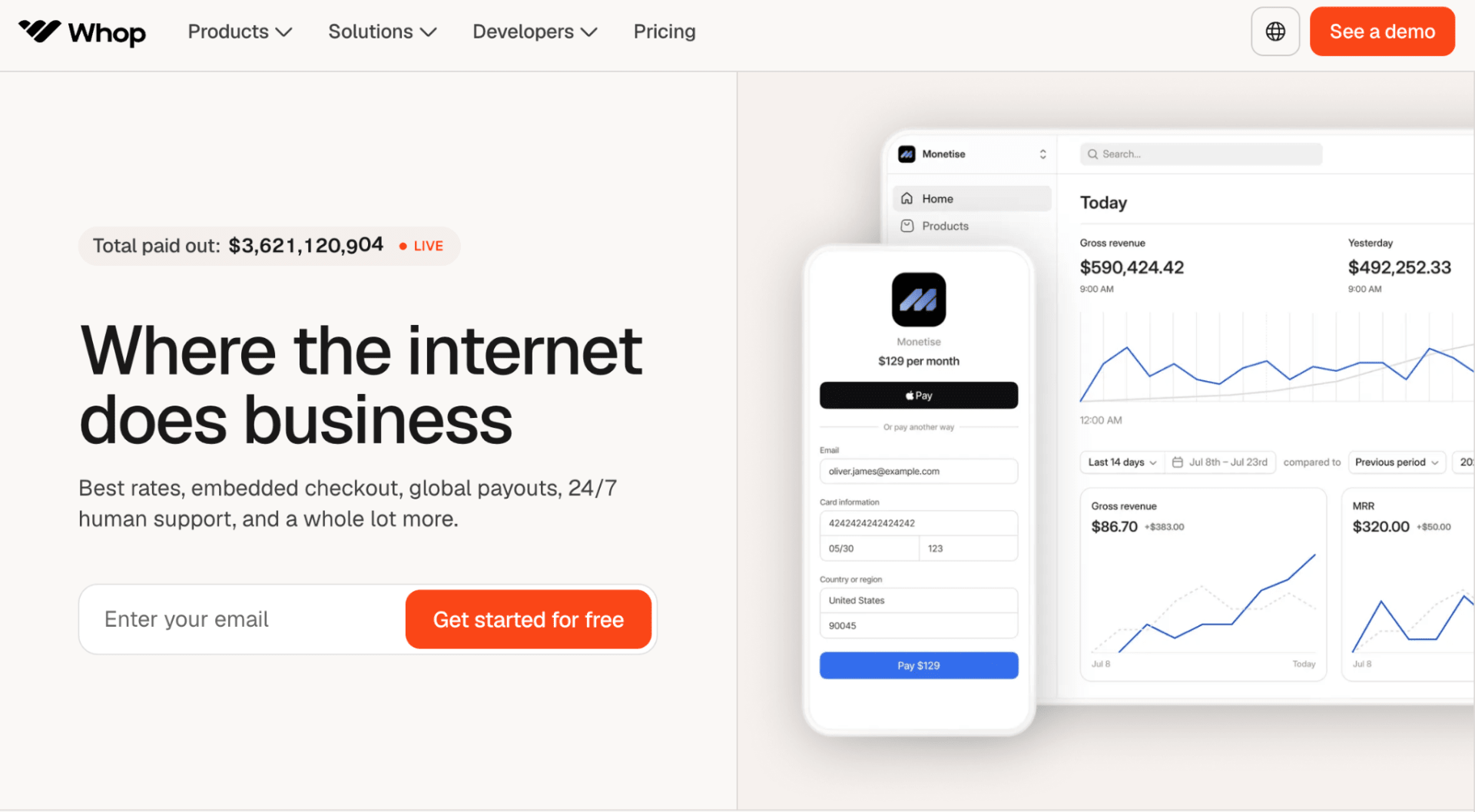
Whop earns one of the top spots because it solves a problem you'll run into eventually if you haven't already: the gap between "accepting a payment" and "delivering a product and managing access." Most payment APIs stop at the transaction. You charge the card, you get a webhook, and then you're on your own figuring out how to unlock a course, provision a Discord role, or gate a download. Whop keeps going past that point.
The developer story is solid. There's a REST API; SDKs for JavaScript, Python, and Ruby (npm install @whop/sdk), webhooks for real-time events; and two checkout patterns: hosted links you can redirect to or embedded checkout components you drop into your own frontend. The embedded option keeps buyers on your domain, which matters for conversion.
But what separates it from a pure payment processor is everything that happens after the charge. Whop automatically provisions access: gating Discord channels, unlocking course modules, adding members to communities, and delivering downloads. You don't build that access layer yourself. And it's MoR, so global taxes, chargebacks, and compliance are handled. You call the API, money shows up in your account, and you never think about VAT again.
The tradeoff: While fees are competitive, international card charges and currency conversion costs can add up, so high-volume cross-border businesses should factor this into their calculations before committing.
4. Lemon Squeezy
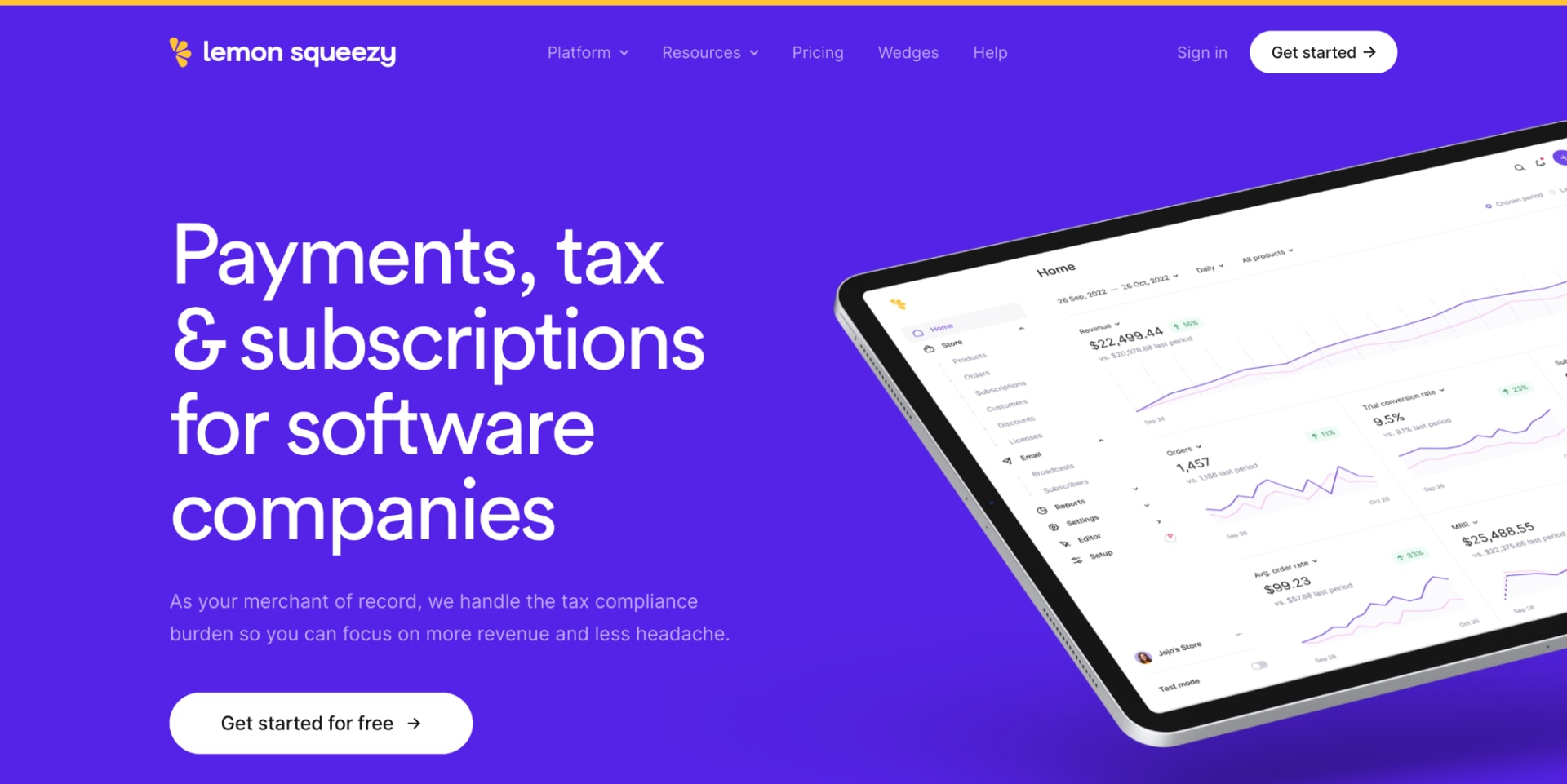
Lemon Squeezy took the Paddle concept and aimed it squarely at indie developers. It's MoR, it handles tax, and the checkout experience is polished enough that you won't feel embarrassed sending customers to it. The API is straightforward, the JS SDK covers the basics, and you can embed checkout overlays on your own site.
Where it shines is simplicity. If you have a digital product and a license key scheme and you just want to sell the thing without thinking about compliance, Lemon Squeezy gets you there faster than almost anything else. The dashboard is intuitive, and the webhook payloads are sensible.
Where it struggles is scale. The API surface is thinner than Stripe's or Paddle's, which means fewer escape hatches when your billing model gets complicated. And the SDK ecosystem is limited to JavaScript for now. For a solo project or a small product line, it's excellent. For a growing SaaS with custom billing needs, you might outgrow it.
5. PayPal
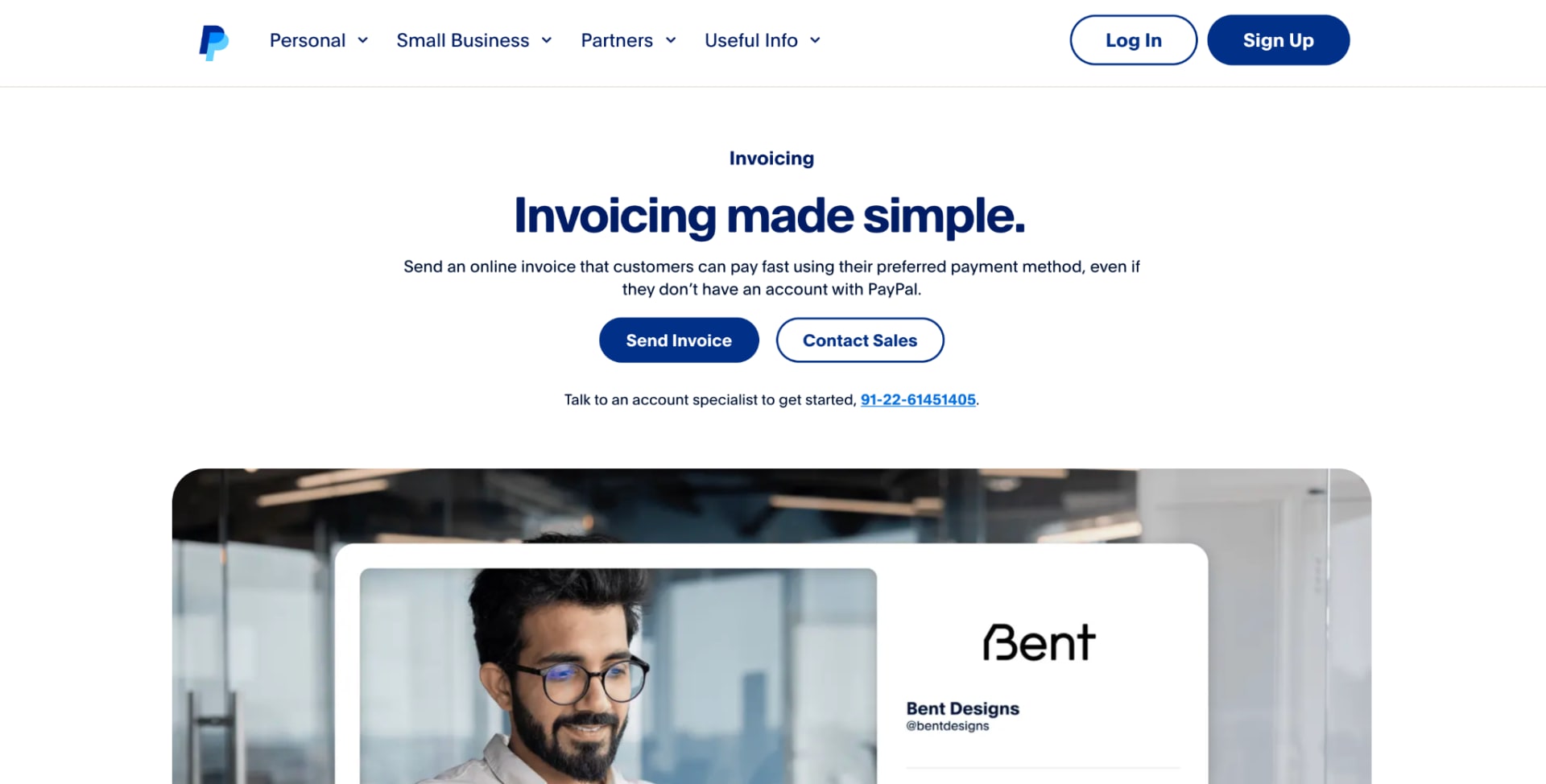
PayPal is the payment method your customers already have. That's its superpower and basically its only one from a developer perspective. The checkout SDK supports server-side integration in Java, Python, and Node, and the client-side buttons are easy enough to drop in.
But the developer experience has definitely improved. The v2 Orders API is a real improvement. But the documentation still feels like it was written by three different teams who never coordinated, and the sandbox has quirks that will cost you time. PayPal is not MoR, so taxes are on you.
Use it when your audience expects it, meaning international consumers or certain demographics, or when you want to offer it as a secondary payment method alongside your primary processor. Don't build your entire checkout around it unless PayPal's buyer base is specifically why you're there.
6. Shopify Checkout
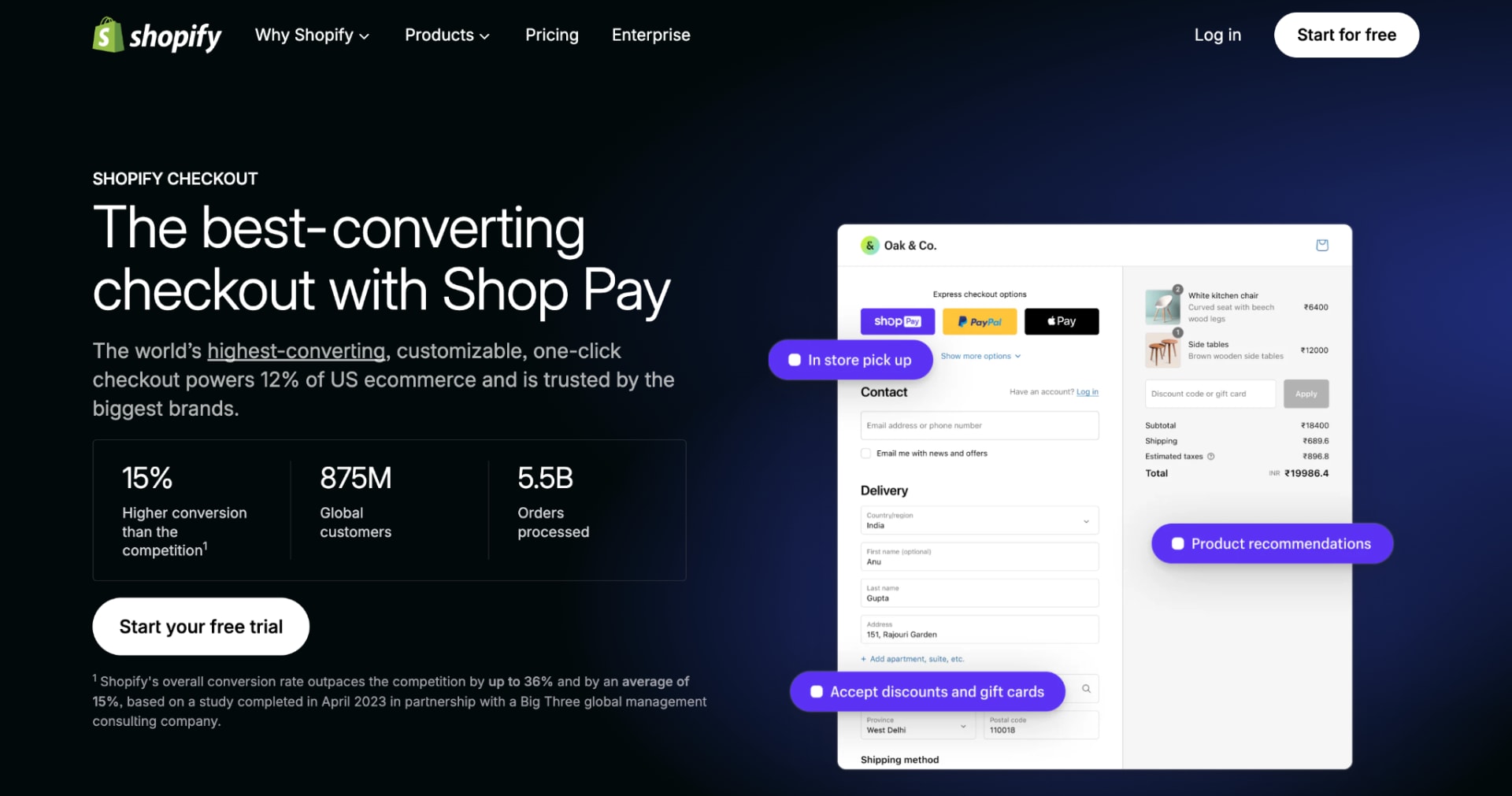
If you're building on Shopify's stack, their checkout is genuinely good. The Hydrogen framework and Storefront API give you a headless approach with a checkout that's been optimized through years of A/B testing across millions of stores. Conversion rates on Shopify Checkout are hard to beat.
For e-commerce, it's top-tier. For digital products, SaaS, or memberships? Wrong tool entirely. Shopify's DNA is physical goods. You can hack it to sell digital stuff, but you're fighting the platform the whole way, and the monthly cost ($39+) hits before your first sale.
7. Gumroad
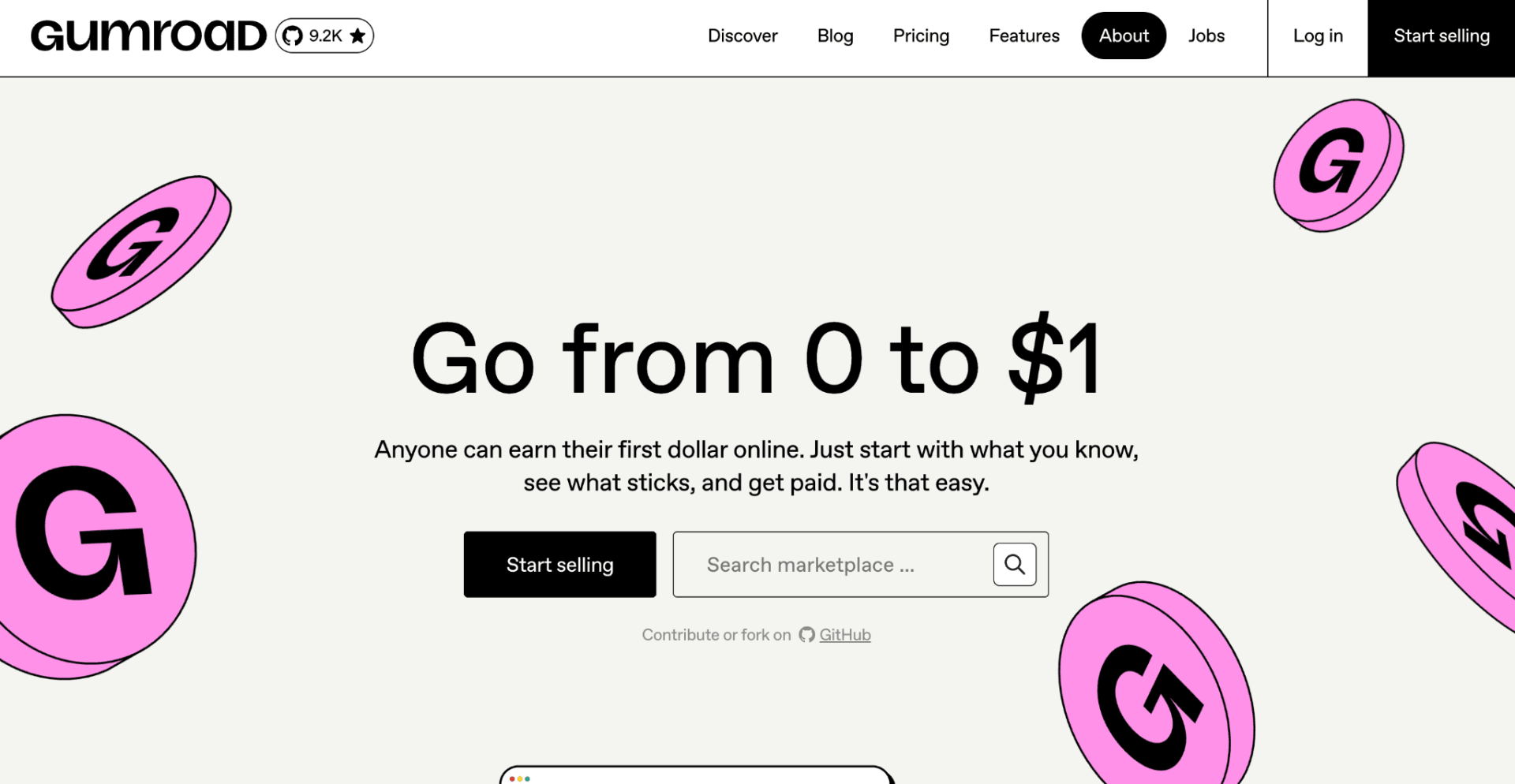
Gumroad is on this list because sometimes the right answer is no code at all. You don't need an SDK. You don't call an API. You upload a file and embed a button, and it works. For a developer who just wants to sell a side project without building a checkout flow, it's honestly kind of refreshing.
It's MoR, handles tax, and takes about 10% per sale. The tradeoff is zero customization. No real webhooks (Zapier integrations, sure). No embeddable components you can style. No API to build against. If you want control, Gumroad isn't it. If you want to ship in an hour and start selling, it absolutely is.
How to Actually Decide
Two questions and the answer usually falls out. First, do you want to build your own access management, delivery, and customer portal, or do you want that handled for you? If you're happy building the full stack, Stripe or Paddle gives you the deepest primitives. If you want the lifecycle handled, from checkout through access provisioning, Whop or Lemon Squeezy does the heavy lifting.
Second, what are you selling? Digital products with memberships and a community access point lead you toward Whop. Metered SaaS billing points toward Stripe or Paddle. E-commerce points toward Shopify. The developers who waste the most time are the ones who pick a tool built for a different product shape and then spend weeks writing glue code to bend it into something it was never designed to be.
Frequently asked questions
1. Do you really need a Merchant of Record?
If you're selling to customers in more than one country, yes, you almost certainly do, or you need a separate tax compliance service bolted onto your payment processor. Selling a $29 template to someone in Germany means you owe German VAT, and figuring out registration, collection, and remittance across dozens of jurisdictions is a genuine time sink. An MoR platform handles all of that silently. For a side project selling domestically, you can skip it. For anything with international customers, the time savings are worth the slightly higher transaction fees.
2. Can you switch payment providers later without breaking everything?
Technically yes. Practically, it's painful. Payment providers touch everything: your checkout flow, your subscription logic, your access control, your webhook handlers, and your tax setup. Migrating active subscribers is especially messy because you need to transfer payment methods or ask customers to re-enter card details, and you will lose some in the process. That's exactly why the "pick the right tool now" advice matters. Spending an extra day evaluating upfront saves you a multi-week migration six months later.
3. What's the real cost difference between these tools?
Pure payment processing (Stripe, PayPal) runs roughly 2.9% + $0.30 per transaction, but you're on the hook for tax compliance, delivery, and access management, which all cost money in tools or development time. MoR platforms (Whop, Paddle, and Lemon Squeezy) charge slightly more per transaction but absorb tax compliance, chargebacks, and often delivery and access management too. When you add up the actual total cost of ownership, including the hours you spend building and maintaining the stack around a raw processor, MoR platforms frequently come out cheaper for small to mid-size products. The math flips at high volume, where that per-transaction difference compounds, which is when a raw Stripe integration starts to make more financial sense.
Comments
Loading comments…